Table of Contents
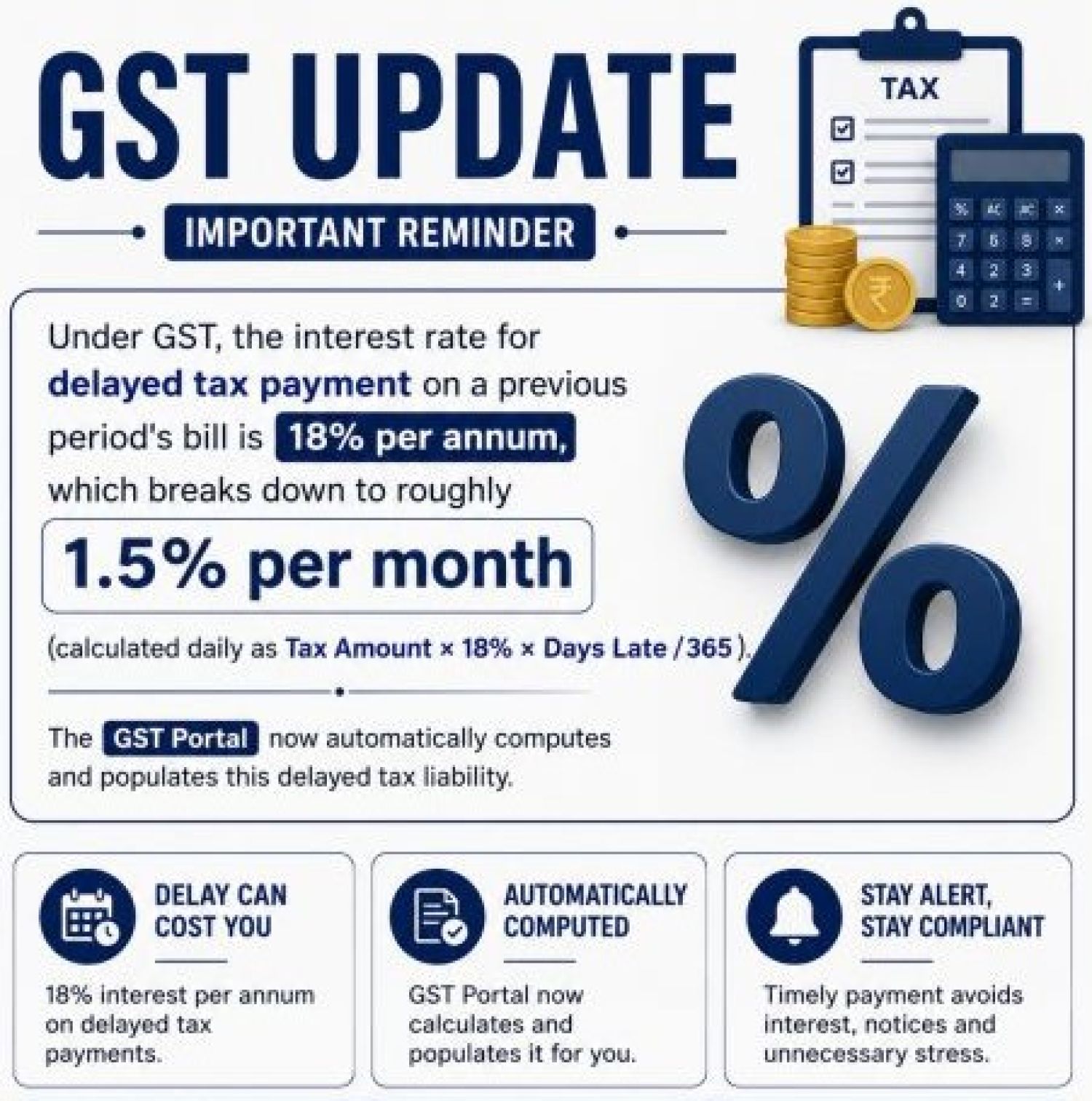
GST Reminder: Delay Can Be Costly!
In this blog we are highlighting an important GST compliance requirement: delay in payment of GST can result in interest liability at 18% per annum, which is automatically calculated by the GST Portal.
Why Is Interest Charged?
Under the GST law, if a registered taxpayer pays GST after the due date, the government charges interest for the period of delay. The objective is simple:
- GST is a destination-based tax collected on behalf of the government.
- Delayed payment means delayed remittance of government revenue.
- Therefore, interest is compensatory and becomes mandatory.
Interest Rate on Delayed GST Payment
| Particulars | Rate |
|---|---|
| Delay in payment of GST liability | 18% per annum |
| Approximate monthly equivalent | 1.5% per month |
| Calculation basis | Daily basis |
GST Portal Now Calculates Interest Automatically
A major compliance change is that the GST system now:
- Identifies delayed tax payment
- Calculates interest automatically
- Populates the liability in the GST return/payment screen
- Requires taxpayer to discharge the liability
This reduces calculation errors and increases departmental scrutiny.
Difference Between Late Fee and Interest
Many taxpayers confuse these two.
| Particulars | Interest | Late Fee |
|---|---|---|
| Levied on | Delayed tax payment | Delayed return filing |
| Purpose | Compensation for delayed tax | Penalty for non-filing |
| Rate | 18% p.a. | Fixed statutory amount |
| Automatic calculation | Yes | Yes |
Important: A taxpayer may have to pay both
- Late Fee for delayed return filing
- Interest for delayed tax payment
Common Situations Where Interest Applies
- Late payment of GST liability: Example: GST payable on 20th August, paid on 10th September. Interest applies for the delay period.
- Wrong utilization of ITC: If excess or ineligible ITC is utilized for paying GST, interest may become payable.
- Additional tax discovered during assessment: Where tax is found short paid, interest becomes mandatory up to the payment date.
- Voluntary payment after due date: Even if the taxpayer voluntarily pays tax later, interest is still payable.
Consequences of Ignoring Interest Liability
Failure to pay applicable interest may lead to GST notices, Demand orders, Assessment proceedings, Recovery proceedings, Blocking of refunds in certain situations and Increased compliance burden
How Businesses Can Avoid GST Interest
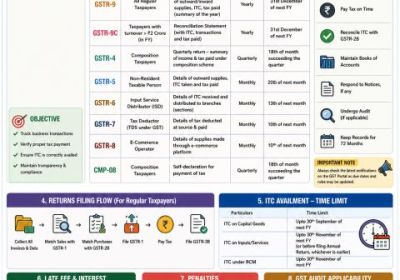
- Maintain GST Calendar: Track GSTR-1, GSTR-3B, CMP-08, and Annual Return due dates.
- Reconcile GSTR-2B Monthly: Identify ITC mismatches early.
- Maintain Sufficient Cash Ledger Balance: Avoid last-minute funding issues.
- Review Tax Liability Before Due Date: Conduct monthly GST closure process. and Use Automated Compliance Tools
ERP and GST software can generate reminders before due dates.
A delay of even one day in payment of GST can trigger interest at 18% per annum, calculated on a daily basis. Since the GST Portal automatically computes and reflects this liability, businesses should ensure timely filing and payment of GST to avoid unnecessary interest, penalties, notices, and compliance risks. Quick Reminder
| Particulars | Position |
|---|---|
| Delayed GST Payment | Interest Applicable |
| Interest Rate | 18% p.a. |
| Monthly Equivalent | 1.5% |
| Calculation Method | Daily Basis |
| Portal Calculation | Automatic |
| Best Practice | Pay GST before due date |
GST Compliance: Why Timely Payment Matters
Timely GST filing and payment help businesses avoid late fees, 18% annual interest on delayed tax payments, and potential legal consequences. Staying compliant ensures smooth operations, prevents notices and penalties, and protects GST registration from unnecessary risks.
Timely GST compliance costs nothing. Delayed compliance can be expensive.