Table of Contents
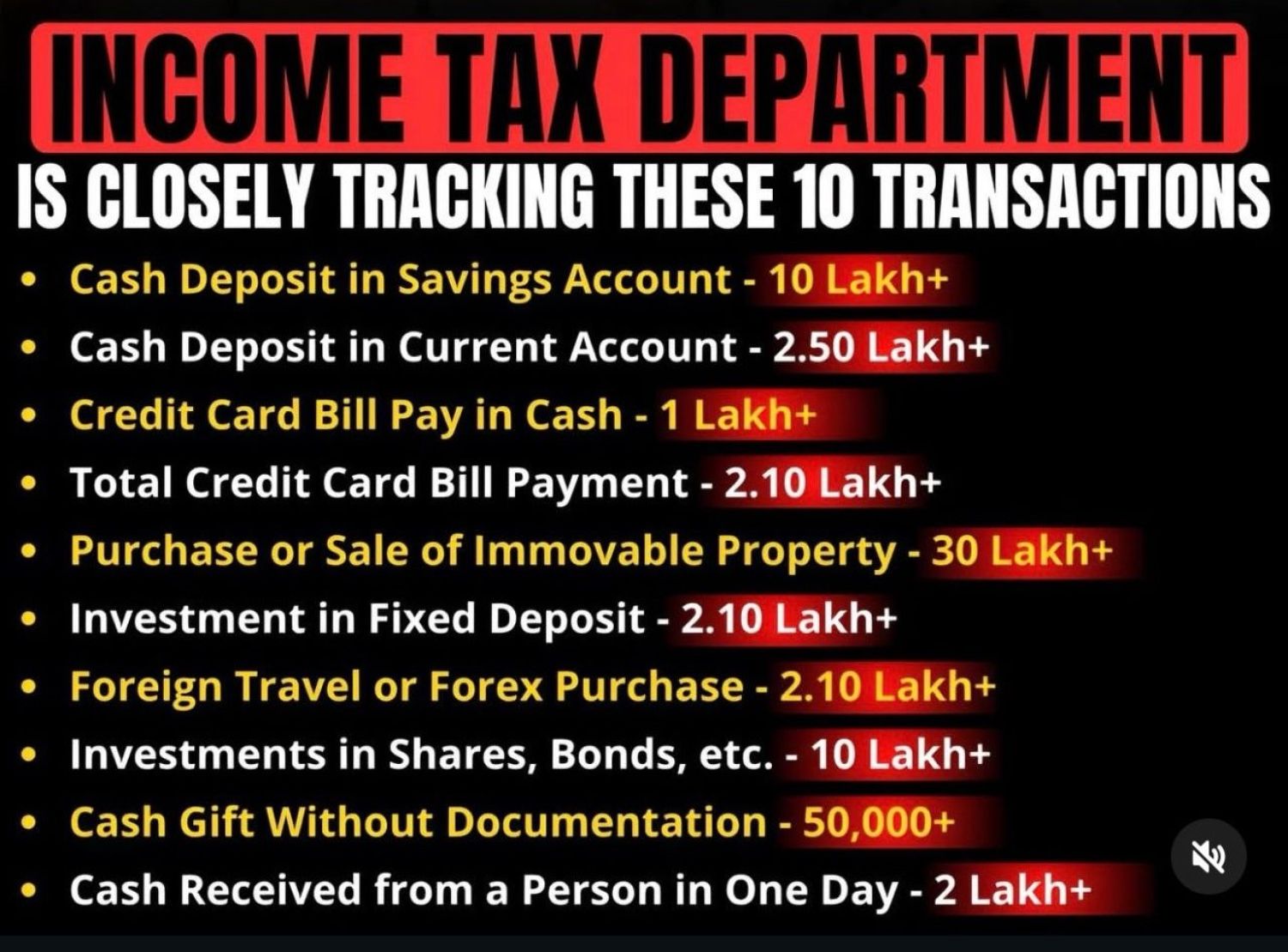
Income Tax Department is Closely Tracking These 10 Transactions
Tax dept. has significantly strengthened its surveillance mechanisms to curb tax evasion and ensure transparency in financial dealings. If you engage in high-value transactions, it’s crucial to understand the reporting norms and thresholds that can trigger scrutiny. Staying informed helps you remain compliant and avoid unnecessary notices or penalties.
Why Does the IT Department Track These Transactions?
The primary objective is to detect unaccounted income and prevent money laundering. Banks, financial institutions, and other entities are required to report certain transactions under the Annual Information Return and Statement of Financial Transactions provisions. Non-compliance or misreporting can lead to penalties and even prosecution in severe cases.
Why monitoring matters: The tax dept. actively tracks high-value financial transactions, including large cash deposits or withdrawals, the purchase or sale of immovable property, high-value investments, credit card spending beyond prescribed limits, foreign remittances, and overseas transactions.
What transactions are tracked?
Being aware of these reporting and disclosure norms is essential to avoid unwanted scrutiny. Smart Compliance Checklist:
- Track your financial transactions regularly
- Maintain proper records and supporting documentation
- Disclose income fully and accurately
- File your returns within due dates
Income Tax Reporting Norms Explained: Top 10 High-Value Transactions Under the Tax Radar
Transparent financial behaviour doesn’t just help you avoid notices, penalties, and litigation it also strengthens your long-term financial credibility with banks, investors, and tax authorities. 10 High-Value Transactions Under the Tax Radar
1. Cash Deposit in Savings Account – INR 10 Lakh+
If you deposit cash exceeding INR 10 lakh in your savings account during a financial year, the bank must report it to the Income Tax Department.
2. Cash Deposit in Current Account – INR 2.50 Lakh+
For current accounts, the threshold is much lower. Cash deposits above INR 2.5 lakh in a single day or cumulatively can attract attention.
3. Credit Card Bill Payment in Cash – INR 1 Lakh+
Paying your credit card bill in cash beyond INR 1 lakh in a year is a red flag. Prefer digital or banking channels for large payments.
4. Total Credit Card Bill Payment – INR 2.10 Lakh+
If your annual credit card bill payments exceed INR 2.10 lakh (irrespective of mode), it will be reported. This helps authorities assess lifestyle versus declared income.
5. Purchase or Sale of Immovable Property – INR 30 Lakh+
Property transactions above INR 30 lakh are mandatorily reported. Ensure proper PAN disclosure and TDS compliance under Section 194-IA.
6. Investment in Fixed Deposit – INR 2.10 Lakh+
Large fixed deposits exceeding INR 2.10 lakh in a year are monitored. Interest earned must be disclosed in your income tax return.
7. Foreign Travel or Forex Purchase – INR 2.10 Lakh+
Spending INR 2.10 lakh or more on foreign travel or buying foreign currency triggers reporting. This includes tour packages and forex cards.
8. Investments in Shares, Bonds, etc. – INR 10 Lakh+
High-value investments in securities beyond INR 10 lakh in a year are tracked. Ensure proper documentation and disclosure in your ITR.
9. Cash Gift Without Documentation – INR 50,000+
Receiving cash gifts above INR 50,000 without proper documentation can lead to tax implications. Gifts from non-relatives are taxable under Section 56(2).
10. Cash Received from a Person in One Day – INR 2 Lakh+
Accepting INR 2 lakh or more in cash from a single person in one day violates Section 269ST and can attract a penalty equal to the amount received.
Long-term benefits of transparency- Smart compliance tips :
Knowledge today can save penalties tomorrow. Smart compliance is always cheaper than careless mistakes. Transparent financial behavior doesn’t just help you avoid notices and penalties; it builds long-term credibility with banks, investors, and tax authorities. Following Smart Compliance Checklist
✔ Track your financial transactions regularly
✔ Maintain proper records and supporting documents
✔ Disclose income fully and accurately
✔ File your returns within due dates