Table of Contents

What Are ESOPs (Employee Stock Option Plans)?
ESOPs are equity compensation plans where employers grant employees the right to buy company shares at a predetermined exercise (strike) price after a vesting period. Employees typically benefit when the FMV (Fair Market Value) of shares rises above the exercise price. Employee Stock Option Plans in India are taxed at two stages:
Two Key Tax Events for Employees in India
At the Time of Exercising ESOPs, Taxed as Salary Perquisite: Tax at the Time of Exercise (Perquisite Tax under Salary) : When an employee exercises the Employee Stock Option Plan’s and receives shares, the tax applies even if the shares are not sold. How it’s calculated: Perquisite Value = Fair Market Value on exercise date – Exercise Price.
When you exercise options (i.e., choose to buy shares), the difference between the FMV on the exercise date and the exercise price paid. is treated as a perquisite (fringe benefit) and added to your income from salary in that financial year. This perquisite is taxed at your normal income-tax slab rates. Employer’s Role: employer deducts TDS on this perquisite and includes it in your Form 16.
Formula: Perquisite value = FMV (on exercise) − Exercise price
This amount is treated as salary and taxed at the employee’s applicable slab rate. Key Points
- TDS must be deducted by the employer.
- FMV must be determined as per Rule 3 by a merchant banker/CA (especially for unlisted companies).
- Creates a cash‑flow burden because tax is payable without receiving proceeds from the sale.
On Sale of Shares—Capital Gains Tax on ESOP:
After you exercise and get shares in your demat, selling them triggers capital gains tax:
Capital Gains Rates on ESOP (2026)
A. Capital Gain on Sale of ESOP in case of Listed Shares
- Long Term (held for more than 12 months): 12.5% beyond exemption of INR 1.25 lakh
- Short Term (held ≤ 12 months): 20%
B. Capital Gain on Sale of ESOP in case of Unlisted Shares
- Long Term (held > 24 months): 12.5% (no indexation)
- Short Term (held ≤ 24 months): Taxed at slab rates
Cost of Acquisition = FMV on exercise date (not exercise price). And for unlisted shares, different holding periods and rates apply (LTCG > 24 months, often with indexation).
Tax at the Time of Sale (Capital Gains Tax) : Capital gains are calculated using Cost of Acquisition = Fair Market Value on the date of exercise. (The lower exercise price is not used again—avoids double taxation.)
Why listed vs unlisted matters in the case of ESOP: Unlisted Employee Stock Option Plans often create illiquidity, high fair market value → high perquisite tax, and long holding periods.
Special Relief for Eligible Start-Ups Related to ESOP: Employees of eligible start-ups get a deferral of perquisite tax under Sections 80‑IAC and 192(1C). Tax is deferred until the earliest of the sale of shares, the employee exiting the company, and the completion of 48 months from the end of the assessment year. This relief significantly reduces the cash‑flow burden for startup employees.
Tax experts and industry bodies have highlighted the expansion of the Employee Stock Option Plan’s tax deferment to more startups, and CBDT made clear rules for cross-border Employee Stock Option Plan taxation. Aligning with global best practices to reduce disputes. Also made specified apportionment models for service rendered in multiple jurisdictions.
Startup ESOP Tax Deferment (Special Relaxation):
To ease cash flow burdens, Indian law allows deferment of perquisite tax for eligible startups: Instead of paying perquisite tax in the year of exercise, tax is deferred until the earliest of expiry of 5 years from the end of the year of share allotment, date of sale of Employee Stock Option Plan’s shares, and date of termination of employment.
This benefit was initially limited to startups approved by an Inter-Ministerial Board (IMB) under Section 80-IAC, a relatively small number of companies. Budget 2026 discussions suggest expanding this deferment to all DPIIT-recognized startups (not just IMB certified), broadening benefits to more employees.
Cross-Border / Global Mobility Issues related to ESOP (2026 Focus): Under current law, Employee Stock Option Plan perquisites are taxed in India when exercised, but there’s no clear statutory rule on apportioning these benefits when you’ve worked both in India and abroad during vesting. This has led to inconsistent assessments by tax authorities and uncertainty/double taxation risks for expatriates, returning Indians, and globally mobile professionals. Calls for clearer guidance in Budget 2026 for service-based apportionment rules.
Example: How ESOP Tax Works:
Exercise price = INR 100, fair market value on exercise = INR 300, and shares sold at INR 800 after >12 months. At Exercise: Perquisite = 300 − 100 = INR 200 per share (taxed as salary) and On Sale: Capital gain = 800 − 300 = INR 500 per share, LTCG = 12.5% on gains above INR 1.25 lakh threshold (if listed)
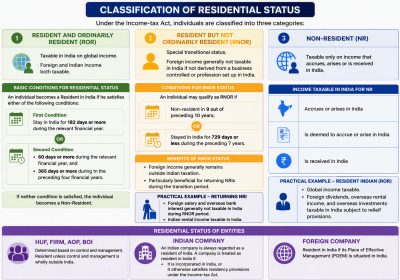
Filing & Disclosure related to ESOP: Disclose Employee Stock Option Plan’s exercises and share sales in ITR (e.g., ITR-2/ITR-3)—not ITR-1—especially if you hold foreign shares/Employee Stock Option Plan’s. If a foreign employee stock option plan's shares are exercised/sold, a foreign tax credit may be available under DTAA (if applicable).
Advance Tax on ESOP: Employee Stock Option Plan’s perquisites and capital gains may require advance tax payments to avoid interest under Section 234B/234C.
ESOP Records & Valuation
- Maintain evidence of fair market value and exercise dates.
- For cross-border Employee Stock Option Plans, detailed documentation of service periods in/out of India can be crucial.
Summary of ESOP Taxation in India
Tax Stages at a Glance
|
Stage |
Tax Type |
How Taxed |
|||||||||
|---|---|---|---|---|---|---|---|---|---|---|---|
|
Grant of Employee Stock Option Plan’s |
Not taxable |
No tax on mere grant |
|||||||||
|
Vesting |
Not taxable |
Vesting alone doesn’t trigger tax |
|||||||||
|
Exercise |
Salary perquisite |
(Fair Market Value − Exercise price) taxed at slab |
|||||||||
|
Sale of shares |
Capital Gains |
STCG/LTCG depending on holding |
|||||||||
|
Stage |
What Gets Taxed |
Tax Rate |
Notes |
||||||||
|
Exercise |
Fair Market Value – Exercise Price (Perquisite) |
Slab rate |
The employer deducts TDS; cash-out is required even without a sale. |
||||||||
|
Sale |
Sale Price – Fair Market Value (Exercise Date) |
Depends on listed/unlisted & holding |
Fair market value at exercise becomes cost basis. |
||||||||
|
Startup Relief |
Perquisite tax deferred |
— |
Pay later on sale/exit/48 months. |
||||||||
|
Holding Period |
Type of Gain |
Tax Rate (Listed Shares) |
|||||||||
|
≤ 12 months |
Short-Term (STCG) |
15% (plus cess/surcharge) |
|||||||||
|
> 12 months |
Long-Term (LTCG) |
12.5% (above INR 1.25 lakh threshold) |
|||||||||
ESOP Taxation in India—Practical Guidance (For Employees)
- Never exercise an employee stock option plan without calculating the perquisite tax first.
High fair market value → heavy immediate tax outflow. - Plan for long‑term capital gains (a 12.5% rate can save a lot).
- Maintain documentation: FMV certificates, grant letters, Form 12BA, and exercise records.