Table of Contents

Overview Crypto Tax Implications in India (As of 2026)
The blog explicitly notes that the 30% flat tax on crypto gains remains unchanged. And the 1% tax deducted at the source on crypto transactions also continues as it is. This means the framework introduced in Budget 2022 continues without relaxation. So, from a taxation standpoint, Budget 2026 provides the status quo—no rate cuts, no relief, and no restructuring.
India now has one of the strictest and most clearly defined tax regimes for Virtual Digital Assets (VDAs), including cryptocurrencies, tokens, and NFTs. Below is a practical breakdown based on the latest guidance and reporting requirements.
No Change in Crypto Tax Rates in Budget 2026
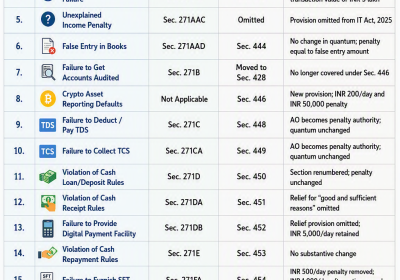
Major Change: New Penalties Under Section 509 (Effective 1 April 2026) : The only significant tax‑related impact from this blog comes from reporting and compliance, not tax rate. Budget 2026 proposes new penalties for reporting failures: Under amended Section 446 via new Section 509: INR 200 per day penalty for non‑furnishing of required crypto transaction statements and INR 50,000 penalty for providing inaccurate particulars and failing to correct them. These penalties apply to crypto exchanges, reporting platforms, and intermediaries required to furnish transaction statements. Effective Date: 1 April 2026
Crypto Users (Retail Investors) : These compliance penalties are for reporting entities, not retail users. Also, retail users do not face new taxes or new penalties for personal trading. But users must ensure proper transaction records, using compliant, transparent exchanges and accurate disclosures in ITR (Schedule VDA). So, while the tax burden remains high, users are not affected by the new penalty provisions directly.
Current 2026 Crypto Ecosystem in India.
Budget 2026 tightens compliance obligations. Indian operative crypto exchanges/platforms must strengthen backend reporting systems, Indian operative crypto exchanges/platforms must ensure 100% accurate transaction reporting, and Indian operative crypto exchanges/platforms must ensure mismatches between user trades and reported statements. Failure to comply leads to an INR 200/day penalty for late filing and an INR 50,000 penalty for inaccurate reporting. This pushes exchanges toward higher transparency, similar to banks and stockbrokers.
Flat 30% Tax on Crypto Gains (Section 115BBH)
All profits from selling crypto, swapping one coin for another, spending crypto, receiving crypto, and later selling it. are taxed at a flat 30% rate, irrespective of holding period. There is no distinction between short-term and long-term gains. A 4% health & education cess applies on the tax amount.
No Deductions Allowed in Crypto Taxation
Indian operative crypto exchanges/platforms cannot deduct trading fees, gas fees, platform charges, and Internet/electricity/mining expenses. Only the cost of acquisition is permitted.
No Set‑off or Carry Forward of Losses
Losses from any Virtual Digital Assets Cannot be set off against other crypto gains, virtual digital assets cannot be set off against any income (salary/business/capital gains), and virtual digital assets cannot be carried forward.
1% Tax deducted at source on Crypto Transfers (Section 194S)
Indian operative crypto exchanges/platforms must make a 1% tax deduction at the source on crypto transfers above threshold limits. Thresholds for INR 50,000 per year for individuals/HUFs not carrying business and INR 10,000 per year for others
Tax deducted at source applies to both Indian and foreign exchanges. For P2P trades, users may need to self‑deduct and deposit Tax deducted at source. Government data shows over INR 1,095 crore in tax deducted at source collected in 3 years.
Taxation of Crypto Income (Other than Trading)
Some crypto receipts are taxed as income at slab rates, including staking rewards, mining rewards, airdrops, and crypto received as consideration. Later, when the asset is sold, the 30% tax applies again on the gain.
Crypto Received as Gift:
If the fair market value exceeds INR 50,000, and it’s not from a specified relative, the gift becomes taxable for the recipient.
Mandatory Reporting – Schedule Virtual Digital Assets
Income tax return form ITR 2 and income tax return form ITR 3 now include Schedule Virtual Digital Assets, where every transaction must be reported trade‑wise. Crypto exchanges and other designated entities now have mandatory reporting obligations starting in financial year 2025-2026.
Penalties & Enforcement in Crypto Noncompliance
What Changes (From 1 April 2026) : New penalties for exchanges/reporting entities: INR 200/day for non-filing and INR 50,000 for inaccurate reporting, so we can say that there are no tax rate changes for users, only compliance tightening. India has become extremely strict on compliance, with 44,000 notices issued for non‑disclosure and over INR 888 crore in undisclosed crypto income detected. From April 2026, stricter penalties for non-compliance take effect.
|
Aspect |
Tax Treatment |
|
Crypto gains |
30% + 4% cess |
|
Loss set-off |
Not allowed |
|
Loss carry-forward |
Not allowed |
|
Tax deducted at source |
1% on transfers over the threshold |
|
Tax on staking/mining |
Slab rate (on receipt) + 30% on sale |
|
Deductible expenses |
Only cost of acquisition |
|
Reporting |
Mandatory via Schedule Virtual Digital Assets |
|
Gifts |
Taxable if value > INR 50,000 (non-relative) |
Summary for Crypto Tax Implications in India
Budget 2026 signals No relaxation of taxes, no move to regulate crypto fully, and a shift toward data accuracy, formal reporting, and compliance hygiene. The government is focusing on preventing misuse, improving transaction visibility, gathering accurate tax‑grade data, and avoiding systemic risks without banning crypto. It reflects a "partial oversight, not mainstreaming" strategy. So, we can say something about the crypto taxation after 2026.
- 30 percent tax on crypto gains
- 1 percent tax deducted at source on transactions
- No setoff of losses
- No carry forward
- No deductions except for the cost of acquisition