Table of Contents
GSTN Introduces E-Invoicing for RCM Self-Invoices: RCMDOM & RCMIMP
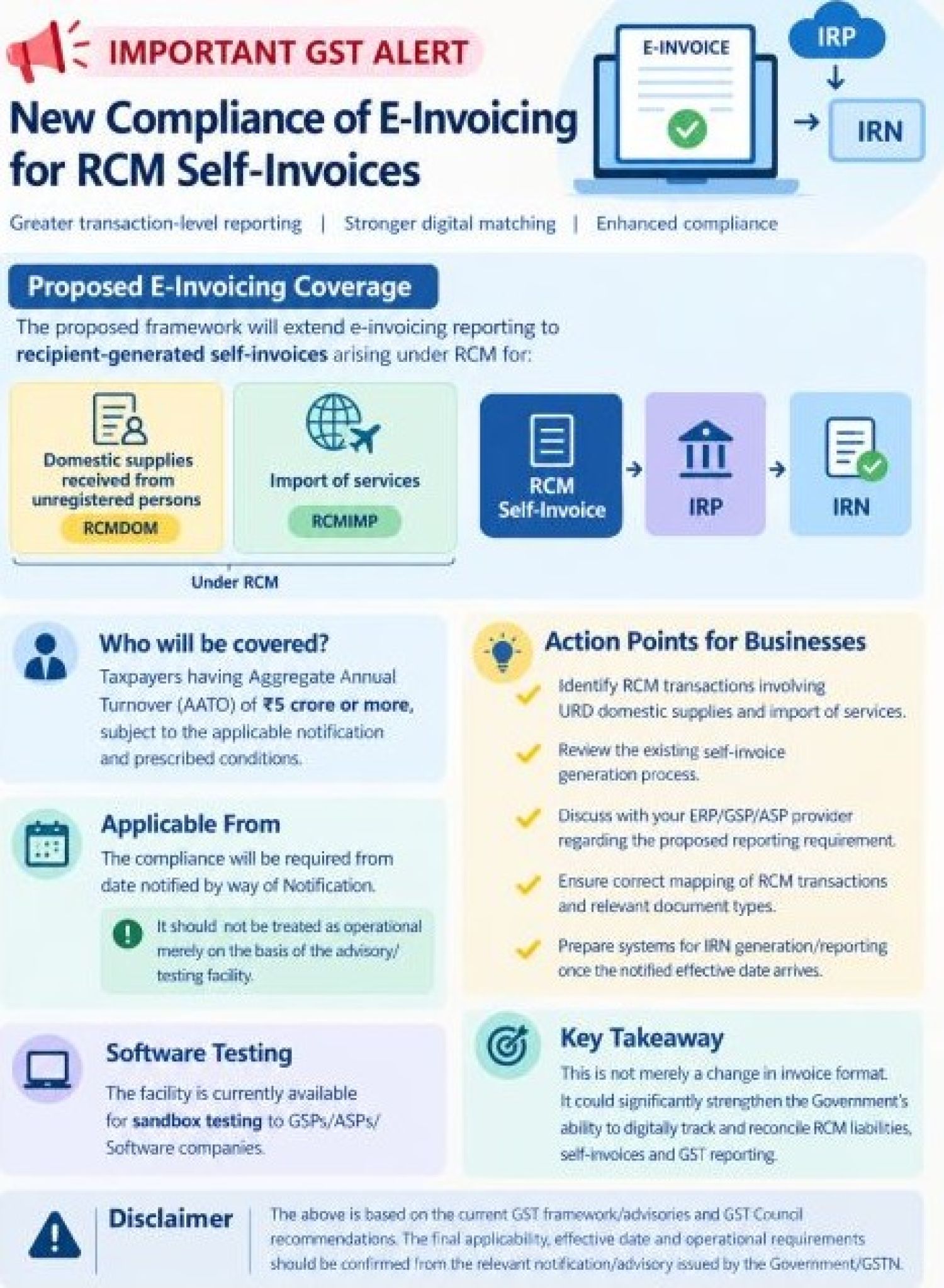
In line with the recommendations made during the 57th GST Council Meeting, the Goods and Services Tax Network (GSTN) has announced a significant enhancement to the e-Invoicing framework. The e-Invoice system is being expanded to cover recipient-generated self-invoices issued under the Reverse Charge Mechanism (RCM) for specified domestic transactions and import of services.
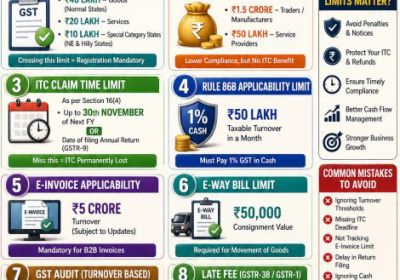
Under this new initiative, taxpayers having an Aggregate Annual Turnover (AATO) of INR 5 crore or more will be able to generate Invoice Reference Numbers (IRNs) for self-invoices issued in relation to:
- Domestic supplies received from unregistered persons where GST is payable under Reverse Charge Mechanism (RCM).
- Import of services received from suppliers located outside India, where GST liability is discharged by the recipient under RCM.
New Supply Types Introduced
To facilitate reporting of such transactions, GSTN has introduced two new e-Invoice supply categories:
RCMDOM – Reverse Charge Mechanism on Domestic Supplies
This category covers recipient-generated self-invoices for specified domestic supplies received from unregistered suppliers where the registered recipient is liable to pay GST under reverse charge.
RCMIMP – Reverse Charge Mechanism on Import of Services
This category covers recipient-generated self-invoices for services imported from overseas suppliers where GST is payable by the recipient under reverse charge provisions.
How the New System Will Work
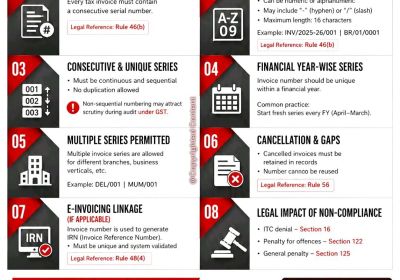
Eligible taxpayers will be required to report their self-invoices through an authorised Invoice Registration Portal (IRP) by selecting the appropriate supply type code, namely RCMDOM or RCMIMP. Upon successful validation of invoice details, the system will generate an Invoice Reference Number (IRN) in accordance with the applicable e-Invoice specifications.
Applicability
The functionality has been designed for taxpayers who are already covered under the existing e-Invoicing threshold of INR 5 crore aggregate annual turnover or above. However, the actual applicability, effective date, and compliance requirements will be governed by the relevant GST notifications and statutory provisions issued by the government.
Current Status
GSTN has made the new functionality available in the sandbox environment of all authorised IRPs for testing and system integration by taxpayers, ERP providers, GSPs, and ASPs. The production rollout date and mandatory implementation timeline will be notified separately.
Key Impact for Businesses on RCMDOM & RCMIMP
- Enhanced tracking and reporting of Reverse Charge transactions.
- Improved audit trail through IRN-based self-invoicing.
- Greater compliance transparency for import of services and domestic RCM transactions.
- ERP and accounting systems may require modifications to support RCMDOM and RCMIMP reporting.
- Large taxpayers with turnover exceeding INR 5 crore should begin evaluating affected transactions and system readiness.
Conclusion
The introduction of RCMDOM and RCMIMP marks a significant expansion of India's e-Invoicing ecosystem. By bringing recipient-generated self-invoices under the e-Invoice framework, the Government aims to improve compliance monitoring, strengthen audit trails, and ensure accurate reporting of Reverse Charge Mechanism transactions. Businesses covered under the e-Invoicing regime should proactively assess their RCM transactions and prepare their systems for the upcoming implementation