Table of Contents
- What Is Esop?
- Key Features Of Employee Stock Option Plan
- Purpose And Benefits Of Employee Stock Option Plan
- Which Companies Can Issue Esop?
- Eligible Employees For Employee Stock Option Plan
- Employees / Directors Not Eligible For Employee Stock Option Plan :
- Exemption For Startups:
- Meaning Of Promoter
- Ways To Issue Shares Under Employee Stock Option Plan
- Comparison At A Glance In Direct Route And Trust Route
- Applicablity Of Various Law To Issue Share Under Esop
- Taxation under Direct Route
- Sale Of Esop Shares
- Taxation under Trust Route
- Valuation, Accounting And Disclosures

What is ESOP?
Employee Stock Option Plan (ESOP) : An Employee Stock Option Plan is an employee benefit scheme that enables employees to own shares in the company. and a long‑term incentive and compensation mechanism under which a company grants its employees the right (but not the obligation) to purchase shares of the company at a pre‑determined price (exercise price) after a specified period, subject to conditions. The employee benefits if the market value of shares increases above the exercise price. These shares are purchased by employees at price below market price, or in other words, a discounted price. This is an employee benefit plan that gives workers ownership interest in the company in the form of shares or stock of the company.
Key Features of Employee Stock Option Plan
- Right to Buy Shares (Not Immediate Ownership) : Employee Stock Option Plan grants an option, not actual shares. Ownership arises only when the employee exercises the option. Until exercise, the employee has no shareholder rights.
- Vesting Period: Options become exercisable only after a specified service period (vesting period). Vesting encourages employee retention. Vesting may be Time‑based, Performance‑based and Combination of both.
- Exercise Price: The price at which employees can buy shares. Usually lower than the Fair Market Value (FMV) at the time of exercise. The difference between FMV and exercise price represents a financial benefit.
- Exercise Period: After vesting, the employee must exercise the option within a specified time. Unexercised options generally lapse after the exercise window.
- Alignment of Interests: Employees benefit when company valuation increases. Aligns employee performance with shareholder wealth creation.
Purpose and Benefits of Employee Stock Option Plan
- Employee Retention: Vesting conditions encourage employees to stay longer with the company.
- Motivation & Performance: Employees are motivated to improve company performance, as their personal wealth is tied to growth.
- Ownership Culture: Creates a sense of participation, commitment, and ownership. Employees think like shareholders.
- Cash Flow Advantage for Company: Employee Stock Option Plan’s are non‑cash compensation at the time of grant. Particularly useful for startups and growing companies.
- Attracting Talent: Attractive tool to hire and retain skilled professionals, especially where high cash salaries are not feasible.
- In Short : Employee Stock Option Plan = Right + Retention + Reward + Ownership
- It rewards employees for long‑term contribution and company growth, rather than short‑term performance alone.
- For Employee Stock Option Plan we can take the Legal Reference Section 62(1)(b) of Companies Act, 2013, Rule 12 of Companies (Share Capital & Debentures) Rules, 2014 also DPIIT Notification for Startup ESOP Exemption.
Which Companies Can Issue ESOP?
Under Indian law, Employee Stock Option Plan’s can be issued by most companies, subject to applicable statutory and regulatory compliance.
1. Public Companies (Listed or Unlisted)
- Listed Public Companies: Can issue Employee Stock Option Plan’s in accordance with Companies Act, 2013 and SEBI (Share Based Employee Benefits and Sweat Equity) Regulations, 2021. SEBI regulations govern Eligibility of employees, Disclosure requirements, Shareholder approvals and Administration of Employee Stock Option Plan schemes.
- Unlisted Public Companies: Governed by Companies Act, 2013 and Rule 12 of the Companies (Share Capital and Debentures) Rules, 2014. Fewer compliances compared to listed entities (no SEBI regulations).
2. Private Companies: Private Companies are allowed to issue ESOPs, subject to Companies Act, 2013, Companies (Share Capital and Debentures) Rules, 2014, Approval by Board of Directors and Shareholders (special resolution). Private companies enjoy several exemptions (e.g., fewer disclosures, flexibility in conditions), especially if they are recognized startups.
Startups (Recognised by DPIIT): Eligible Startups enjoy special relaxations, such as Employee Stock Option Plan’s can be granted to Promoters, Directors holding more than 10% equity, longer exercise period post resignation/termination and Simplified compliance framework. These relaxations apply only if the entity is recognized as a startup by DPIIT.
Notes: Companies That Cannot Issue Employee Stock Option Plan like Sole Proprietorships, Partnership Firms (including traditional partnerships), LLPs (since they do not have share capital) and Employee Stock Option Plan’s require share capital, hence they are limited to companies.
Eligible Employees for Employee Stock Option Plan
An Employee Stock Option Plan may be granted to the following persons:
- Employees of the Company: A permanent employee of the company, Whether working in India or outside India. includes employees on the payroll, irrespective of location
- Directors of the Company: A Director, whether Whole‑time director, or Part‑time director. Independent Directors are NOT eligible for Employee Stock Option Plan’s.
- Employees / Directors of Group Companies: A permanent employee or director of Subsidiary company (India or outside India), or Holding company, or Associate company.
- Employees on Probation: Employees on probation are eligible, provided they are On the rolls/payroll of the company, and identified as employees under company policy.
- Contractual Employees (Long Term) : Employees appointed under long‑term contractual employment (e.g., 3–4 years), Eligible if they are on the payroll of the company. Pure consultants or third‑party hires are not eligible.
So in Summary Any company having share capital, public or private, including startups can issue ESOPs, subject to statutory compliance.
- Listed Public Company : Allowed (SEBI + Companies Act)
- Unlisted Public Company : Allowed (Companies Act)
- Private Company : Allowed (Companies Act)
- Recognised Startup : Allowed with relaxations
- LLP / Partnership / Proprietorship : Not allowed
Employees / Directors NOT Eligible for Employee Stock Option Plan :
The following people are specifically excluded:
- Promoters & Promoter Group: An employee who is A promoter of the company or Belonging to the promoter group.
- Directors Holding More Than 10% Equity: A director who Directly or indirectly holds more than 10% of the outstanding equity shares, Either In his own name, or through anybody corporate, or through his relatives.
- Employee Stock Option Plan’s can be granted to employees and non‑independent directors of the company or its group companies, except promoters and >10% shareholders unless the company is a recognised startup.
EXEMPTION FOR STARTUPS:
Startup Relaxation: In the case of a DPIIT‑recognised startup, the above disqualifications do NOT apply for a limited period. For up to 5 years from the date of incorporation or registration: Employee Stock Option Plan’s can be granted to Promoters or employees belonging to promoter group, Directors holding more than 10% of equity, directly or indirectly. After completion of 5 years, normal eligibility restrictions apply.
Meaning of Promoter
As per the Companies Act, 2013 and SEBI Regulations, a “Promoter” means A person or persons who:
(a) Person(s) in Overall Control: Have overall control over the affairs of the company, whether acting directly or indirectly.
(b) Person(s) Instrumental in Formation: Are instrumental in the formation of the company, or In the formulation of a programme or scheme pursuant to which shares are offered to the public.
(c) Persons Named as Promoters : Are named as promoters in the offer document, prospectus, or other disclosure documents filed with regulators.
Exclusion: A director or officer of the company acting purely in a professional capacity (such as a lawyer, CA, consultant, merchant banker) shall NOT be deemed to be a promoter.
Explanation: Where the promoter of a company is a body corporate, the promoters of that body corporate shall also be deemed to be promoters of the company. This provision expands promoter identification through corporate layers, which is crucial in Employee Stock Option Plan eligibility and disclosures.
Promoter Group:
“Promoter Group” refers to a group of persons connected to the promoter whose shareholding and control are collectively relevant for disclosure purposes. It includes:
(a) Immediate Relatives of the Promoter: Immediate relatives include Spouse, Parents, Brothers and sisters, Children and Relatives of the spouse. Relationships are considered by blood or marriage.
(b) Persons with Aggregated Shareholding: Persons or entities whose shareholding is aggregated for the purpose of disclosing promoter group shareholding in Offer documents, Annual reports and SEBI filings.
This aggregation reflects collective control and influence, even if individual holdings are small.
Ways to Issue Shares under Employee Stock Option Plan
An Employee Stock Option Plan can be implemented by a company through two routes:
1.Direct Route:
Meaning Under the Direct Route, the company itself issues shares directly to the employees when they exercise their stock options. Key Features of Direct Route
- Employee Stock Option Plan’s are granted by the company to eligible employees.
- After completion of the vesting period, employees exercise their options.
- On exercise, the company allots fresh shares to the employees.
- Employees become direct shareholders of the company
flow (Direct Route): Grant of Option → Vesting Period → Exercise by Employee → Fresh Allotment of Shares.
Important Points for Direct Route for An Employee Stock Option Plan can be implemented is Generally involves fresh issue of shares. and that Results in dilution of existing shareholding. Simple and commonly used by Startups, Unlisted companies, Companies not using trust structures.
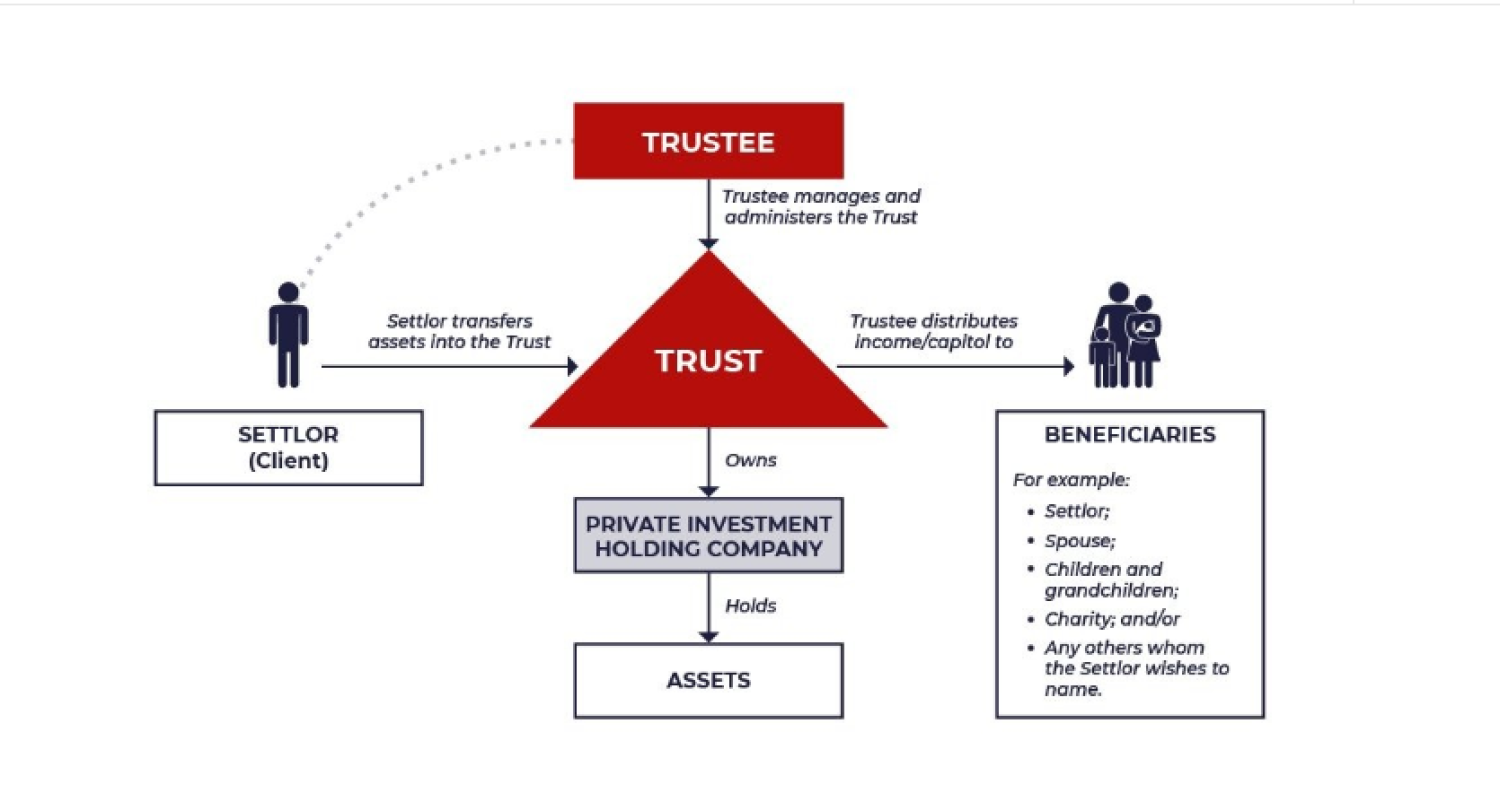
2.Trust Route:
Meaning Under the Trust Route, a separate legal entity called an Employee Welfare Trust is created to implement the Employee Stock Option Plan scheme. Key Features of Trust Route for Employee Stock Option Plan implemented.
- Company creates employee welfare trust.
- Trust holds shares in a fiduciary capacity for employees.
- Upon exercise of options by employees, the trust transfers shares to the employees.
- Employees become shareholders on such transfer.
Sources of Shares in Trust Route: The trust may acquire shares through Fresh issue of shares by the company and Existing shares, including Secondary market purchases (for listed companies)
SEBI Limits (For Listed Companies – Secondary Acquisition)
- If the trust acquires shares through secondary market acquisition: Maximum acquisition in a financial year: 2% of the paid‑up equity share capital and Overall holding limit at any point in time: 5% of the paid‑up equity share capital. These limits are prescribed to prevent excessive market impact and insider concerns.
- Flow (Trust Route): Grant of Option → Vesting → Exercise by Employee → Transfer of Shares by Trust
Comparison at a Glance in Direct Route and Trust Route
- Direct Route: Fresh issue only, Simpler structure and Dilution occur at exercise
- Trust Route: Fresh issue or existing shares, requires trust set up and Useful for listed companies and large Employee Stock Option plans.
- Employee Stock Option Plan shares may be issued either directly by the company through fresh allotment, or indirectly through an employee welfare trust using fresh or existing shares, subject to statutory limits.
Applicablity of Various Law to issue share Under ESOP
1.The Companies Act, 2013 and rules made thereunder
- Section 62 (1) (b) of Companies Act, 2013 states that where at any time, a company having a share capital proposes to increase its subscribed capital by the issue of further shares, such shares shall be offered to employees under a scheme of employees’ stock option, subject to special resolution passed by company and subject to such conditions as may be prescribed.
- Such prescribed conditions are mentioned in Rule 12 of The Companies (Share Capital and Debentures) Rules, 2014
Conditions as per the Rule 12 of The Companies (Share Capital and Debentures) Rules, 2014-
- A company, other than a listed company, shall not offer shares to its employees under a scheme of employees’ stock option (ESOP), unless it complies with the following requirements, namely: -
- The issue of Employees Stock Option Scheme has been approved by the shareholders of the company by passing a special resolution.
The company shall make the following disclosures in the explanatory statement annexed to the notice for passing of the resolution—
- the total number of stock options to be granted;
- identification of classes of employees entitled to participate in the Employees Stock Option Scheme;
- the appraisal process for determining the eligibility of employees to the Employees Stock Option Scheme;
- the requirements of vesting and period of vesting;
- the maximum period within which the options shall be vested;
- the exercise price or the formula for arriving at the same;
- the exercise period and process of exercise;
- the Lock-in period, if any;
- the maximum number of options to be granted per employee and in aggregate;
- the method which the company shall use to value its options;
- the conditions under which option vested in employees may lapse e.g. in case of termination of employment for misconduct;
- the specified time period within which the employee shall exercise the vested options in the event of a proposed termination of employment or resignation of employee;
- and a statement to the effect that the company shall comply with the applicable accounting standards.
As per Rule 12 of the Company (Share Capital and debenture) Rules, 2014, Employees have no right to receive any dividend or to vote or in any manner or enjoy the benefits of a shareholder in respect of option granted to them, till shares are issued on the exercise of the option.
2.SEBI (Share Based Employee Benefits and Sweat Equity) Regulations, 2021
- As per regulation 2(1) (J) of SEBI (Share Based Employee Benefit & Sweat Equity) Regulations, 2021: “Employee stock option scheme or ESOS means a scheme under which a company grants stock options to its employees directly or through a trust”.
- Provided that if the scheme is to be implemented through a trust, the same has to be decided upfront at the time of taking approval of the shareholders for setting up the scheme.
- Pursuant to the regulation 3(2) of SEBI (Share Based Employee Benefits & Sweat Equity) Regulations, 2021, A company may implement several schemes as permitted under these regulations through a single trust.
- Provided that such single trust shall keep and maintain proper books of account, records and documents for each scheme so as to explain its transactions and to disclose at any point of time, the financial position of each scheme and in particular give a true and fair view of the state of affairs of each scheme.
3.SEBI (Listing Obligations and Disclosure Requirements) Regulations, 2015
- This regulation is made mainly for trust route and also throws light on the administration process of ESOPs along with various other schemes.
- Please refer SEBI (Listing Obligations and Disclosure Requirements) Regulations, 2015.
4.The Foreign Exchange & Management Act 1999.
- If a Company grants ESOPs to its foreign employees, it has to comply the Foreign Exchange & Management Act 1999.
- Investment received from the foreign employee is treated as FDI.
- Any investment made by the foreign employee shall be subject to the entry routes (Automatic or Approval route), Sectoral Cap, investment limits, pricing guidelines.
- In case of approval route, approval from RBI is mandatory prior to the grant of such ESOP to the foreign employees. But for automatic route there is no approval required.
- If Indian holding company issues ESOP to employees of its foreign subsidiary, who are working in the land sharing border countries such as Pakistan, Bhutan, China, Taiwan, Nepal, Macao, Hong Kong, Myanmar etc the approval from the Reserve Bank of India is mandatory.
- In case if FEMA regulations trigger there shall be filing in two ways:
- At the time of granting of options issuer needs to file Form ESOP Reporting Form with RBI.
- At the time of issue and allotment of Capital Instruments the Form FCGPR shall be filed.
Taxation Under Direct Route
in the hands of company:
The benefit from exercising ESOPs is taxable as a perquisite. Consequently, the employer must withhold tax (TDS) on the perquisite value at the time of exercise. This TDS is deducted when the shares are allotted. The tax is recovered from the employee through the payroll of the relevant month. Employers can claim a tax deduction under section 37(1) of the Income Tax Act in computing the income in profit and loss of business or profession, for the cost of shares issued to employees under the ESOP scheme. This is allowed in the year the employee exercises the option and acquires the shares.
Various rulings, such as CIT Vs Lemon Tree Hotels Limited (2015) and M/s Biocon Limited Vs Deputy Commissioner of Income Tax (2020), have favoured employers, stating that ESOP-related expenses are allowable deductions. The courts have recognized these expenses as employee costs, incurred to compensate employees for their continued service.
In the hands of the employee:
Grant of ESOPs When the ESOP is granted to the employee, it is not taxable as income. However, when the employee exercises the ESOP and acquires the shares, the difference between the fair market value of the shares on the date of exercise and the exercise price paid by the employee is taxable as perquisite in the hands of the employee.
The fair market value of the following securities allotted under the ESOP scheme shall be computed as per Rule 3:
- Quoted shares; and
- Unquoted equity shares.
|
Scenarios |
Fair Market Value |
|
Where shares are listed on one stock exchange on the date of exercising of ESOP |
Average of the opening price and closing price of the share on that date on the stock exchange |
|
Where shares are listed on more than one stock exchange on the date of exercising of ESOP |
Average of opening price and closing price of the share on that stock exchange which records the highest volume of trading in the share |
|
Where on the date of exercising of ESOP there is no trading in shares in the stock exchange |
|
|
Where shares are not listed on a stock exchange |
Value of share as determined by a merchant banker under Section 17(2)(vi) of Income Tax Act, 1961 & as per Rule 3(8)(i)(iii) of the Income Tax Rules 1961 on:
the option, not being a date which is more than 180 days earlier than the date of the exercising. |
Sale of ESOP shares
If the employee sells the shares, difference between the selling price and the fair market value (FMV on the date when option was exercised to acquire shares) is taxable as capital gains. If ESOP shares are sold after 12 months of buying them, it shall be deemed as long-term capital gain. If the shares are sold before completion of 12 months from the date of buying them, the income arise shall be deemed as short-term capital gain.
The period of holding of securities shall be the period commencing from the date of allotment of securities, and not from the date of exercising of option, ending on the date when employees transfer the securities.
Further, the fair market value of securities on the date of exercising the option shall be taken as the cost of acquisition of such securities to compute the capital gain.
If the ESOPs are offered to the Directors it is treated as perquisite and hence it becomes part of managerial remuneration under section 197 & 198 of the Companies Act, 2013. Note: - Taxation of foreign ESOPs in India is also similar, and would be taxed in India on the perquisites earned from a foreign company.
Taxation Under Trust Route
- In the hands of company: No liability
- In the hands of the employee: Similar to Direct route (except the table)
- In the hands of the Trust: There will be capital gain/loss when Trust transfers shares to employees. The same will be determined based on the price per share received from the company as loan funds and the exercise price paid by the employees.
Valuation, Accounting and Disclosures
VALUATION
- Intrinsic Value method
Intrinsic value, in the case of a listed company, is the amount by which the quoted market price of the underlying share exceeds the exercise price of an option. If the quoted market price is not available on the grant date, then the share price nearest to that date is taken.
In the case of a non- listed company, since the shares are not quoted on a stock exchange, value of its shares is determined on the basis of a valuation report from an independent valuer.
- Fair Value method
As per Ind AS 102, 3 methods can be used to estimate the fair value of the options – Black-Scholes model, the Binomial/Lattice model, and the Monte- Carlo simulation model. Amongst the three, Black Scholes model is a widely applied method by Indian listed and non-listed entities. In case the market value of such shares is available, then the same will be considered as fair value. Otherwise, various valuation methods as discussed below can be used:
- Black-Scholes model
Widely used for valuing stock options, the Black-Scholes Model incorporates factors such as stock price, exercise price, time to maturity, and volatility to determine the fair value of ESOPs.
- Binomial Model
The binomial option pricing model is a technique used to value options by simulating possible paths the underlying asset's price could take over the option's life.
- Monte- Carlo simulation model
Monte Carlo Simulation is a sophisticated method that uses stochastic processes to model the potential future paths of stock prices. This technique is ideal for valuing complex options with features like path dependency, where the option's value depends on the stock's price movements over time.
It is recommended by the Guidance Note issued by the ICAI (Page No. 27), that accounting for ESOPs should be based on the fair value approach. However, intrinsic value method is also permitted.
We provide expert support for:
- Non‑Filing / Non‑Compliant Companies
- Pending / Open Charge Matters
- Foreign Shareholding / Subsidiary Compliance Cases
- Companies Having Revenue or Pending Liabilities
- Pending Director or Shareholder Disputes
- Section‑8 Company Exit Options
- STK‑1 / ROC Notice Responses & Closure Cases
Important Update: MCA has recently announced a 75% reduction in filing fees under the current scheme. To understand eligibility and avail this benefit, connect with us today.