Table of Contents
- Cbdt Releases Draft Income Tax Rules, 2026 & Forms Key Changes With Mapping
- Drafting Philosophy Behind The New Rules
- Significant Reduction In Rules And Forms
- Compliance Benefits And Ease Of Understanding
- Rule And Form Mapping Navigators
- Stakeholder Action Points Before Final Notification :
- Implementation Gaps & Risks
- Cbdt – Relevant Documents & Resources:

CBDT Releases Draft Income Tax Rules, 2026 & Forms Key Changes with Mapping
The Central Board of Direct Taxes has placed the Draft Income‑tax Rules, 2026, along with the draft forms, in the public domain, inviting comments from stakeholders and the general public. This step has been taken ahead of their notification, with the objective of making the rule‑making process more participative and effective.
This initiative forms an essential part of the rollout of the Income‑tax Act, 2025, which is scheduled to come into force on 1 April 2026. The consultation window is open for 15 days, and feedback may be submitted up to 22 February 2026. The intent is to promote broad participation published to promote transparency and encourage meaningful feedback from taxpayers, professionals, and industry participants before the rules are finalised and enhance the quality and clarity of subordinate legislation before its final notification.
Drafting Philosophy Behind the New Rules
The Draft Income‑tax Rules, 2026 reflect the same simplification‑oriented philosophy underlying the Income‑tax Act, 2025. Key drafting attributes include Clear, simplified language to enhance interpretation. Use of formulas and tables to reduce subjectivity, Elimination of redundant provisions inherited from the 1962 rules, Alignment with substantive procedural changes mandated by the Income‑tax Act, 2025. While maintaining major policy frameworks, procedural adjustments have been incorporated where required by the new Act.
Significant Reduction in Rules and Forms
A major highlight of this redrafting exercise is structural rationalisation. The reduction has been achieved through consolidation of related provisions, removal of obsolete rules, and elimination of duplicative forms. Under Income‑tax Rules, 1962:
- 511 rules
- 399 forms
Under Draft Income‑tax Rules, 2026:
- 333 rules
- 190 forms
Simplified and Smart Forms Framework : The draft forms have been redesigned with an emphasis on ease of compliance and technology integration. Improvements include Standardisation of common fields across forms to avoid repetition, Smart forms capable of automated reconciliation, Prefill functionality to reduce manual input and errors, Simplified instructions and notes to reduce ambiguity. These enhancements support centralised processing and facilitate data‑driven decision‑making, improving service quality for taxpayers.
Compliance Benefits and Ease of Understanding
The rationalised rule set and redesigned forms are expected to deliver tangible benefits across all taxpayer classes. Clearer procedural guidance, Reduced compliance burden, lower likelihood of interpretational disputes, and better integration with digital systems. Technology‑led administration is expected to reinforce ease of living and ease of doing business.
Rule and Form Mapping Navigators
To support stakeholder review and transition, Central Board of Direct Taxes has released two navigational tools:
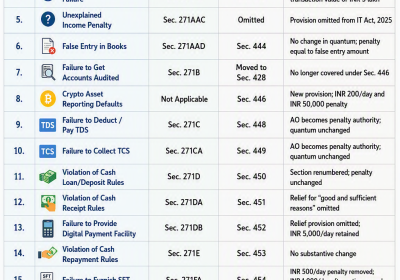
1. Rule‑wise Mapping Navigator : Provides a comparison between the Income‑tax Rules, 1962, and the Draft Income‑tax Rules, 2026, helping users identify corresponding provisions, merged or restructured rules, and newly introduced rules .
2. Form‑wise Mapping Navigator : Maps existing forms under the 1962 Rules with the proposed 2026 forms, clarifying changes in data capture requirements, structure of reporting, and compliance workflows. These tools are designed to promote precise, item‑specific feedback.
Stakeholder Action Points Before Final Notification :
Stakeholders should utilise the consultation period proactively. Recommended steps:
- Review draft rules relevant to income computation, deductions, and procedural obligations
- Examine draft forms to assess new data and reporting expectations
- Use the Central Board of Direct TaxesCBDT navigators to track continuity and evaluate changes
- Prepare focused rule‑specific or form‑specific comments
- Submit feedback on or before 22 February 2026
Early review will help taxpayers and institutions prepare system updates ahead of FY 2026‑27.
Implementation Gaps & Risks
Although the Draft Rules aim to simplify and modernise compliance, practical gaps remain The 15‑day response period may be too short for thorough stakeholder analysis, Consolidation and renumbering may initially cause transitional confusion, Smart‑form reliance assumes uniform digital capability across taxpayers, which may not reflect ground‑level disparities and Actual compliance relief will depend on operational guidelines and system implementation. Effective incorporation of stakeholder feedback will be crucial for smooth implementation.
CBDT – Relevant Documents & Resources:
Below are the key documents and reference materials issued in connection with the Draft Income‑tax Rules, 2026:
- CBDT Note on Draft Income‑tax Rules & Forms, 2026 (Inviting Comments): This official note explains the purpose, drafting philosophy, and timelines for public feedback (15‑day window up to 22 February 2026). 🔗 Link: CBDT Note on Draft Income Tax Rules and Forms 2026 inviting Comments
- CBDT Draft Income‑tax Rules, 2026 – Dated 07/02/2026 : The Draft Rules were released on 7 February 2026 for public consultation. This includes the full set of draft rules aligned with the Income‑tax Act, 2025. 🔗 Link: CBDT Draft Income Tax Rules 2026 dated 07/02/2026
- CBDT Navigator / Mapping of Income‑tax Rules 2026 vs. Income‑tax Rules 1962 : CBDT released navigators to help stakeholders compare each rule under the 1962 Rules with its corresponding position in the new 2026 Rules—making feedback more structured and rule‑wise. 🔗 Link: CBDT Navigator/ Mapping of Income Tax Rules 2026 vis-a-vis Income Tax Rules 1962
- CBDT Draft Forms under Draft Income‑tax Rules, 2026 : The draft forms have been simplified, standardised, and designed with automation and pre‑fill capabilities to reduce compliance burden and enhance user experience. 🔗 Link: CBDT Draft Forms under Draft Income Tax Rules 2026
- CBDT Navigator / Mapping of Income‑tax Forms 2026 vs. Forms under 1962 Rules : Along with rule mapping, CBDT has provided form‑wise navigators comparing old (1962) forms with new (2026) forms to enable clear, item‑by‑item feedback. 🔗 Link: CBDT Navigator/ Mapping of Income Tax Forms under 2026 Rules vis-a-vis 1962 Rules
The Draft Income‑tax Rules, 2026, represent a significant modernisation of India’s tax procedural framework, emphasising simplification, consolidation, and technology‑enabled administration. The public consultation phase is an important opportunity for taxpayers and professionals to help shape the final rules before they take effect on 1 April 2026.