Table of Contents
Both New & old tax regimes now allow salary‑based tax‑free flexi benefits of around INR 3.24 lakh
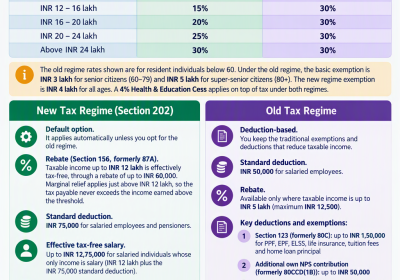
The evolving framework under the Income‑Tax Rules, 2026, highlights an important shift in tax planning. It is no longer just about choosing between the old and new regimes; it is about how effectively income is structured within each regime. When these flexi benefits are combined with regime specific deductions and exemptions, salaried individuals can significantly enhance their effective tax free earnings, regardless of the regime chosen.
What this means for salaried individuals.
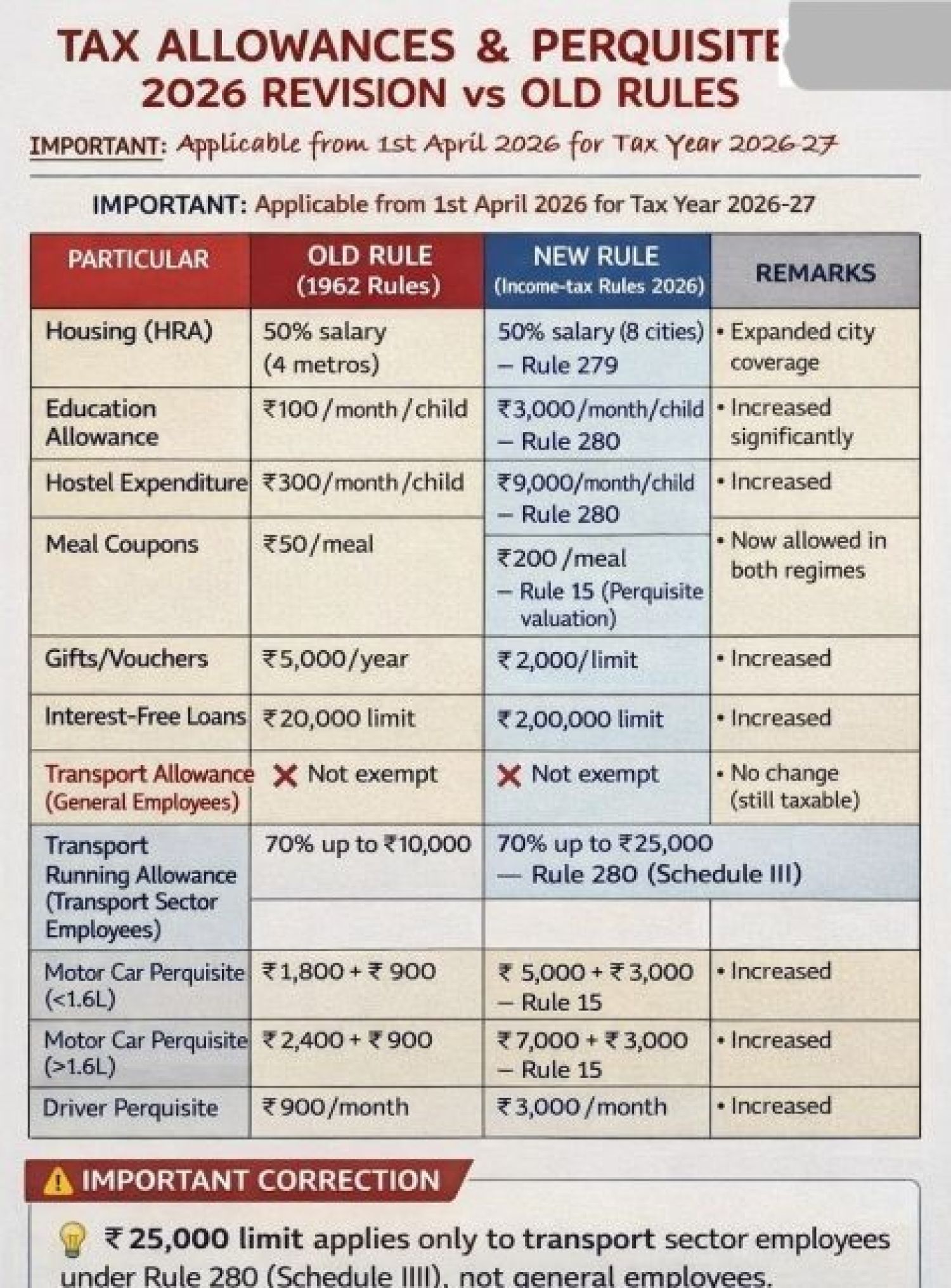
Tax Allowances & Perquisites 2026 Revision (Applicable from 1 April 2026 | AY 2027–28)
The revised income tax rules, 2026, significantly recalibrate several salary allowances and perquisite limits. The change is not merely incremental. it fundamentally strengthens the role of salary structuring in tax efficiency under both tax regimes. The following are key highlights from the Tax Allowances & Perquisites 2026 Revision.
- Housing (HRA): 50% salary exemption now extended to 8 cities (earlier limited to 4)
- Education Allowance: Increased from INR 100/month/child → INR 3,000/month/child
- Hostel Expenditure Allowance: Increased from INR 300/month/child → INR 9,000/month/child
- Meal Coupons
- Enhanced from INR 50/meal → INR 200/meal
- Explicitly allowed under both regimes
- Gifts / Vouchers (non‑monetary): Limit increased from INR 5,000/year → INR 20,000/year
- Interest‑free or concessional loans: Threshold expanded from INR 20,000 → INR 2,00,000
- Motor Car & Driver Perquisite Valuation: Substantially revised upward, making company car structures far more tax‑efficient
- Transport Allowance (general employees): Continues to be fully taxable (no change)
- Transport Sector Employees: Exemption of 70% up to INR 25,000 applies only to notified transport personnel under Rule 280 (Schedule III)
What is the real meaning of "Tax Allowances & Perquisites 2026 Revision"?
Across these allowances and perquisites, both the old and new tax regimes now provide tax-free flexi benefits of approximately INR 3.2–3.3 lakh, subject to proper structuring and eligibility. This reinforces a critical point: tax planning is no longer about “old vs new regime"; it is about how intelligently salary is designed within the chosen regime. A well‑aligned salary structure can Increase tax‑free income without increasing CTC, Improve effective take‑home pay, reduce aggressive year‑end tax‑saving investments and Work equally well under both regimes
With expanded thresholds and greater alignment across regimes, this is a meaningful opportunity to rethink compensation structures. A well‑designed salary structure today can
- Unlock tax efficiency across both tax regimes
- Improve net take home pay without increasing cost to employer
- Maximise the utilisation of available allowances and perquisites
- Reduce the need for last‑minute tax‑saving investments
The way forward after Tax Allowances & Perquisites 2026 Revision
This is an opportune time for organisations and employees to revisit compensation design and align it with the revised tax framework. Strategic structuring rather than regime switching will be the key differentiator in effective tax planning going forward. This is the right time for employers, HR teams, and professionals to Revisit flexi‑basket design, realign allowances with revised thresholds, and educate employees on optimal regime‑specific structuring. . Smart salary design is now as important as smart investment planning.