Table of Contents
Why Every CA Firm Needs a Robust Audit Manual
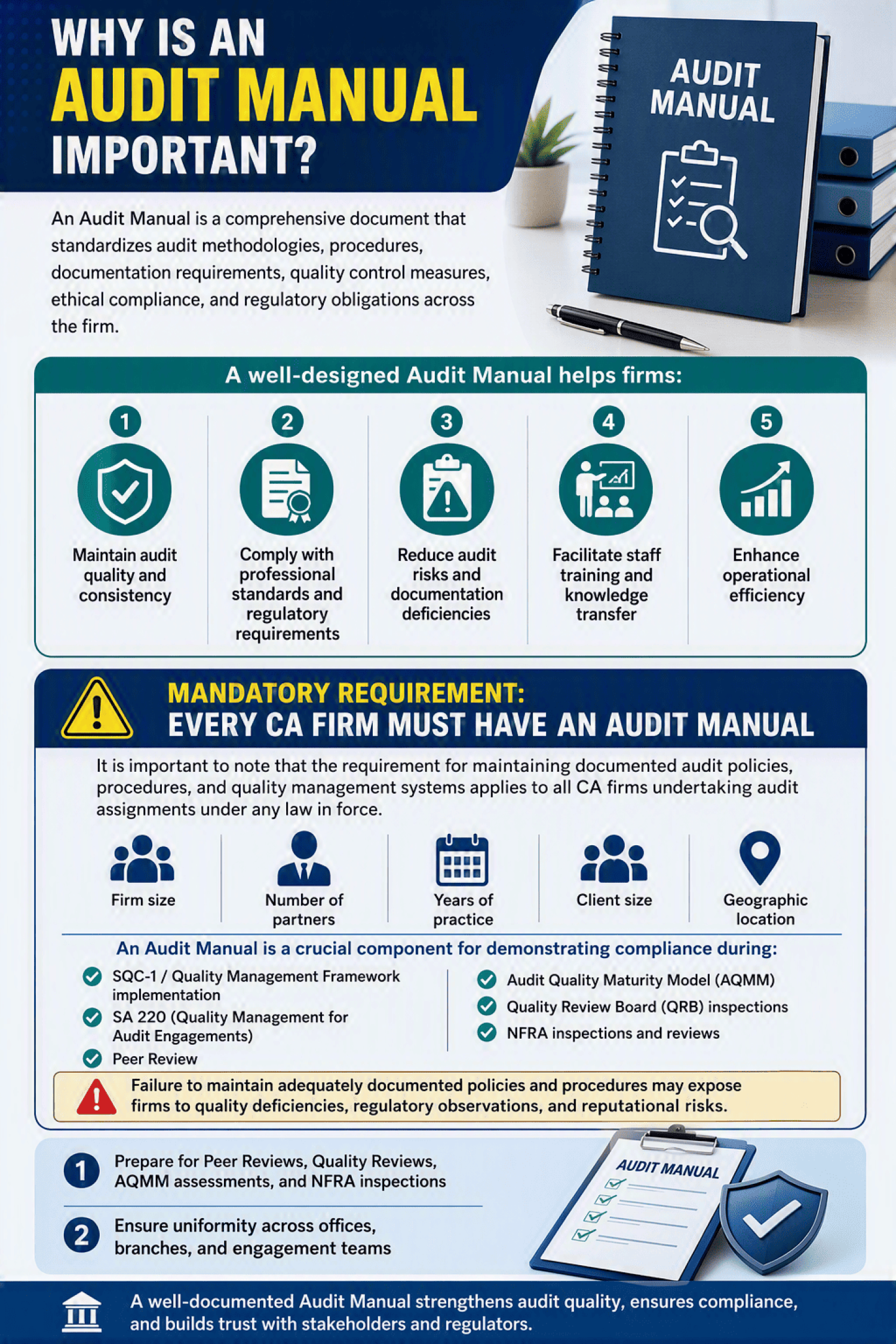
In today's evolving regulatory environment, maintaining audit quality is not merely a best practice but a professional necessity. An Audit Manual serves as the foundation of a Chartered Accountant firm's quality control framework and is essential for firms undertaking statutory audits, tax audits, internal audits, or assurance engagements, regardless of their size, location, client portfolio, or years of practice.
Regulatory Framework Requiring an Audit Manual
The requirement for documented audit policies and procedures is embedded in various professional and regulatory standards, including:
- SQC 1 (Quality Control for Firms that Perform Audits and Reviews of Historical Financial Information and Other Assurance and Related Services Engagements), which mandates firms to establish and maintain a system of quality control.
- SA 220 (Quality Management for an Audit of Financial Statements), which emphasizes quality management at the engagement level.
- Peer Review Framework, where the existence and implementation of documented policies and procedures are regularly evaluated.
- Quality Review Board (QRB) Reviews, which assess adherence to auditing standards and quality practices.
- NFRA Inspections and Reviews, which place significant importance on documented audit methodologies, quality controls, and engagement management processes.
Therefore, every Chartered Accountant firm should maintain a comprehensive Audit Manual to demonstrate compliance with professional standards and ensure consistency in audit execution.
What Should an Audit Manual Contain?
An effective Audit Manual should establish standardized policies, procedures, checklists, templates, and guidance applicable across the firm's Firm Registration Number (FRN) and all its offices. Key components may include:
1. Audit Methodology and Engagement Procedures
Standardized processes covering the entire audit lifecycle, including:
- Audit planning and risk assessment
- Fieldwork and audit execution
- Documentation requirements
- Reporting and issuance of audit reports
- File completion and closure procedures
All procedures should be aligned with the applicable Standards on Auditing (SAs).
2. Client Acceptance and Onboarding
Policies governing:
- Client due diligence
- Independence checks
- Risk assessment before acceptance
- Engagement approval procedures
3. Client Continuance and Relationship Review
Periodic review mechanisms to evaluate whether existing engagements should continue based on risk, compliance, and professional considerations.
4. Internal Inspection and Monitoring
Annual reviews and inspections to assess compliance with firm policies, professional standards, and quality requirements.
5. Engagement Quality Control Review (EQCR)
Procedures for conducting independent quality reviews of specified engagements before issuance of reports.
6. Roles and Responsibilities
Clearly defined responsibilities for:
- Managing Partner
- Engagement Partner
- Quality Control Partner
- Ethics and Independence Partner
- Audit Managers
- Audit Team Members
7. Human Resource Policies
Comprehensive HR procedures relating to:
- Recruitment and induction
- Performance evaluation
- Training and competency development
- Professional ethics and code of conduct
- Career progression and separation processes
8. Digital Knowledge Repository
A centralized digital library providing easy access to:
- Firm policies and technical guidance
- ICAI publications and technical pronouncements
- Training materials and recorded sessions
- Relevant laws, regulations, and regulatory updates
- Audit templates, formats, and practice aid
Quick Checklist for CA Firm
Audit Manual Design
- Existing process review completed
- Gap assessment performed
- Draft manual prepared
- Partner discussions conducted
- Manual finalized and issued
Audit Manual Implementation
- Periodic updates established
- Staff training conducted
- Independence monitoring implemented
- Internal inspections conducted
- File review mechanism operational
- Peer review readiness maintained
- Regulatory consultation support available
- NFRA, ICAI and PMLA compliance monitored
Remember: A documented Audit Manual is not merely a procedural requirement; it is the backbone of a firm's quality management system and a key driver of audit excellence.
Conclusion
An Audit Manual is no longer an optional administrative document; it is a critical component of a CA firm's quality management framework. It promotes consistency, strengthens governance, enhances audit quality, facilitates staff development, and supports regulatory compliance.
For firms conducting even a single statutory or tax audit, the development and practical implementation of a comprehensive Audit Manual should be treated as a priority. In an increasingly regulated and quality-focused profession, firms that invest in robust audit documentation and standardized procedures will be better positioned to meet stakeholder expectations, withstand regulatory scrutiny, and deliver high-quality professional services.