Table of Contents
- Typical Trust Structure Or types Of Trusts: An Overview
- Summary Of Types Of Trusts
- Purpose Of A Family Trust
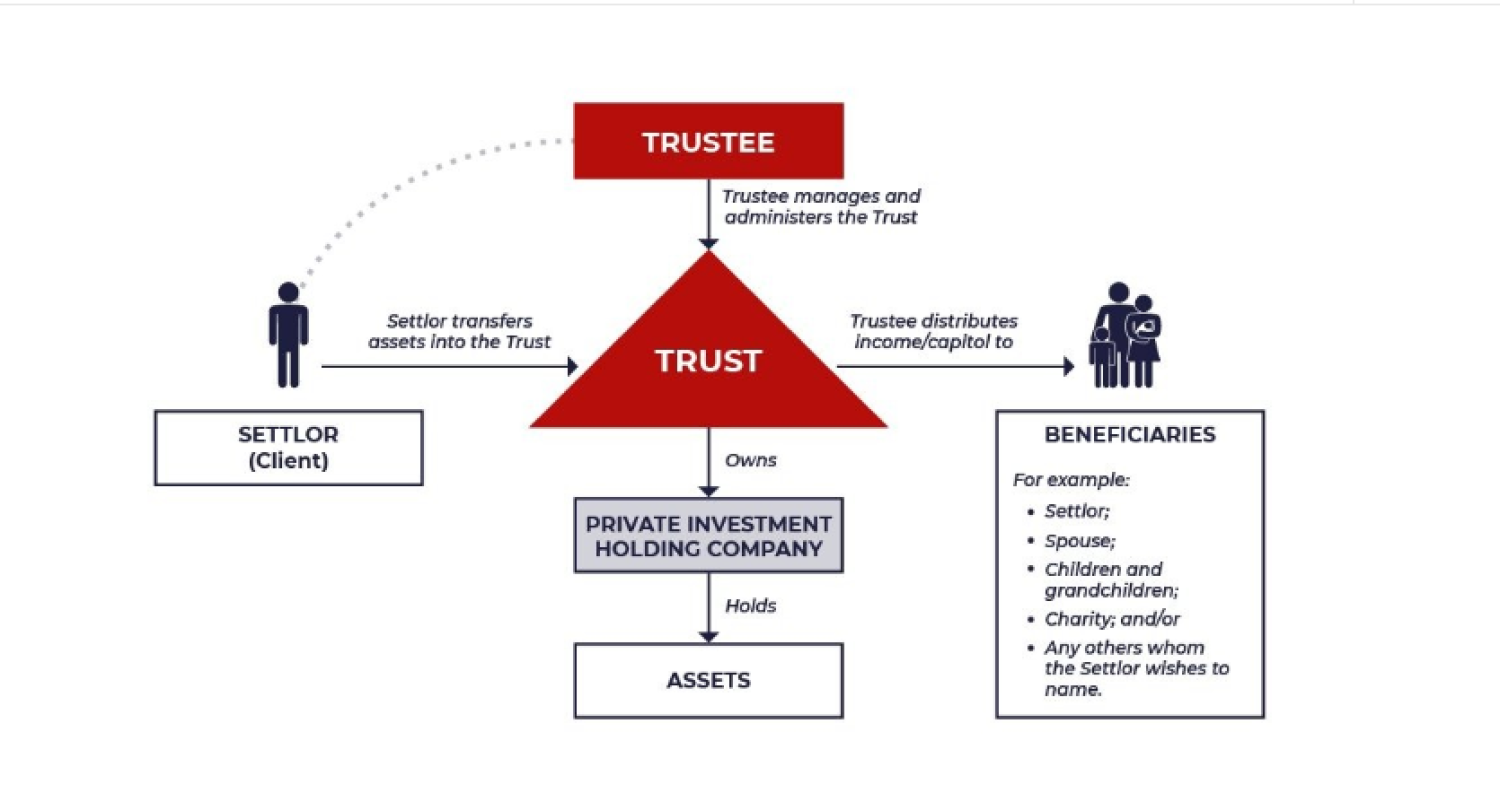
- Trust Structure
- Settlor (author Of Trust)
- Trustee
- Typical Trustee Structure
- Beneficiaries
- Trust Is Not A Separate Legal Entity
- Types Of Trust
- Duties And Powers Of Trustees
- Trust As A Holding Vehicle
- Local Vs Offshore Trust
- Offshore Trust Advantages
- Regulatory Aspects Of Trust
- Overall Conclusion
Typical Trust Structure or Types of Trusts: An Overview
Trusts can be structured in different ways depending on the objectives of the settlor, the needs of the beneficiaries, and the level of control or flexibility desired. The following are some of the most commonly used types of trusts:
1. Discretionary Trust
In a Discretionary Trust, the trustees are given the power to decide how and when the trust income or capital will be distributed among a specified class of beneficiaries.
Key Features:
- Beneficiaries are identified, but their individual shares are not fixed.
- Trustees have complete discretion regarding distributions.
- Income may be accumulated if trustees consider it appropriate.
- Provides flexibility to address changing family circumstances.
Example:
If one beneficiary requires financial assistance for education or healthcare, trustees may allocate a larger share of trust income to that beneficiary.
2. Fixed Interest Trust (Interest in Possession Trust)
A Fixed Interest Trust gives a beneficiary a predetermined and legally enforceable right to receive income or benefits from the trust.
Key Features:
- Beneficiary's entitlement is fixed.
- Trustees have limited discretion.
- Income distribution follows predetermined proportions.
- Beneficiaries can legally enforce their rights.
Example:
A trust deed may provide that a spouse receives all rental income from the trust property during their lifetime.
3. Bare Trust
A Bare Trust is one of the simplest forms of trust in which the beneficiary has an immediate and absolute right to both the trust income and the underlying assets.
Key Features:
- Trustee acts merely as a nominee or custodian.
- Beneficiary is the true owner of the assets.
- Minimal trustee discretion.
- Often used for minors until they attain a specified age.
Example:
Parents may hold investments in a bare trust for their child until the child reaches adulthood.
4. Purpose Trust
A Purpose Trust is established to achieve a specific purpose rather than directly benefiting identifiable beneficiaries.
Key Features:
- Created for a particular objective.
- Commonly used for charitable activities.
- Can also be established for other lawful purposes where permitted.
- Assets are used solely to achieve the stated objective.
Example:
A charitable trust established to provide educational scholarships or healthcare assistance.
5. Trusts for Vulnerable Persons
These trusts are specifically designed to benefit individuals who are vulnerable due to physical disabilities, intellectual disabilities, or mental health conditions.
Key Features:
- Protects the financial interests of vulnerable individuals.
- Ensures long-term care and support.
- May qualify for special tax treatment in some jurisdictions.
- Trustees manage assets on behalf of beneficiaries.
Example:
A trust established by parents to provide lifelong financial support to a child with special needs.
6. Testamentary Trust
A Testamentary Trust is created through a will and comes into existence only after the death of the testator.
Key Features:
- Activated upon death of the testator.
- Provides controlled distribution of assets.
- Particularly useful where beneficiaries are minors.
- Allows conditions to be attached to distributions.
Example:
A parent may direct through a will that a child's inheritance be managed by trustees until the child attains a specified age.
7. Spendthrift Trust
A Spendthrift Trust is designed to protect beneficiaries from poor financial management and from claims of creditors.
Key Features:
- Restricts direct access to trust assets.
- Trustees control distributions.
- Trust assets generally remain insulated from beneficiaries' creditors.
- Provides long-term financial security.
Example:
A beneficiary with a history of excessive spending may receive only periodic distributions rather than unrestricted access to the trust corpus.
8. Family Trust
A Family Trust is established for the benefit of family members and is widely used for succession planning and wealth preservation.
Key Features:
- Facilitates transfer of wealth across generations.
- Provides asset protection.
- Supports estate and succession planning.
- Helps preserve family control over businesses and investments.
Example:
Promoters of a family-owned business may transfer company shares to a family trust to ensure continued ownership and governance by future generations.
9. Asset Protection Trust
An Asset Protection Trust is created primarily to safeguard assets from future creditors, litigation risks, and legal claims.
Key Features:
- Protects family wealth from external claims.
- Commonly used by high-net-worth individuals.
- Assets are transferred into the trust structure.
- May preserve certain beneficial interests for the settlor.
Example:
A business owner may transfer a portion of personal wealth to an asset protection trust to mitigate exposure to future business-related risks.
10. Constructive Trust
A Constructive Trust is not deliberately created by the parties but is imposed by a court to achieve fairness and prevent unjust enrichment.
Key Features:
- Created by operation of law.
- Arises from judicial intervention.
- Common in cases involving fraud, breach of fiduciary duty, or wrongful conduct.
- Intended to restore equitable ownership.
Example:
If a person wrongfully acquires property belonging to another, a court may impose a constructive trust and require the property to be held for the rightful owner.
Summary of Types of Trusts
| Type of Trust | Main Purpose | Trustee Discretion |
|---|---|---|
| Discretionary Trust | Flexible wealth distribution | High |
| Fixed Interest Trust | Fixed beneficiary entitlement | Low |
| Bare Trust | Simple asset holding | Very Low |
| Purpose Trust | Achieving a specific purpose | Moderate |
| Trust for Vulnerable Persons | Support vulnerable beneficiaries | Moderate |
| Testamentary Trust | Succession through a will | Moderate |
| Spendthrift Trust | Protect beneficiaries from creditors and overspending | High |
| Family Trust | Wealth preservation and succession planning | Moderate to High |
| Asset Protection Trust | Protection against future claims | Moderate |
| Constructive Trust | Judicial remedy for equitable relief | Court Imposed |
Purpose of a Family Trust
|
Particulars |
Explanation |
|
Wealth Preservation |
Protects family wealth from erosion and fragmentation |
|
Succession Planning |
Facilitates smooth transfer of wealth across generations |
|
Asset Protection |
Segregates family assets from personal risks and disputes |
|
Family Governance |
Creates a structured framework for decision-making |
|
Inter-generational Transfer |
Ensures continuity of ownership and wealth management |
|
Legal Framework |
Trust acts as a formal mechanism to achieve the above objectives |
Trust Structure
Key Parties in a Trust
|
Person |
Role |
|
Settlor |
Creates the Trust and transfers assets |
|
Trustee |
Manages trust assets and administers the trust |
|
Beneficiary |
Receives income or benefits from the trust |
|
Trust Property |
Assets transferred into the trust |
Settlor (Author of Trust)
|
Particulars |
Details |
|
Meaning |
Person who creates the trust |
|
Typical Examples |
Family Patriarch, Family Matriarch, Relative, Family Friend |
|
Key Functions |
Transfers assets and defines trust rules |
|
Governing Document |
Trust Deed |
Trustee
|
Responsibility Area |
Duties |
|
Investment Management |
Make investment decisions |
|
Asset Administration |
Manage trust assets |
|
Income Management |
Distribute trust income |
|
Compliance |
Ensure compliance with Trust Deed |
|
Beneficiary Protection |
Safeguard interests of beneficiaries |
Typical Trustee Structure
|
Initial Trustees |
Subsequent Trustees |
|
Husband and Wife |
Children and future generations |
Beneficiaries
|
Category |
Examples |
|
Immediate Family |
Spouse, Children |
|
Extended Family |
Grandchildren |
|
Future Beneficiaries |
Future descendants |
|
Rights |
|
Enjoy beneficial ownership of trust assets |
Trust is Not a Separate Legal Entity
|
Particulars |
Explanation |
|
Nature of Trust |
Not a company or corporate body |
|
Legal Character |
An obligation imposed upon trustees |
|
Objective |
Manage assets for the benefit of beneficiaries |
|
Ownership |
Legal ownership with trustee, beneficial ownership with beneficiaries |
Types of Trust
Specific Trust
|
Particulars |
Details |
|
Beneficiary Share |
Fixed |
|
Trustee Discretion |
Not Available |
|
Example |
Son A 40%, Son B 30%, Daughter 30% |
Discretionary Trust
|
Particulars |
Details |
|
Beneficiary Share |
Not Fixed |
|
Trustee Discretion |
Available |
|
Trustee Decides |
When to distribute, How much to distribute, To whom to distribute |
|
Common Usage |
Family succession planning |
Trust Operational Framework
Role of Settlor
|
Particulars |
Explanation |
|
Operational Role |
Generally no role after creation |
|
Selection of Trustees |
Yes |
|
Selection of Beneficiaries |
Yes |
|
Setting Trust Objectives |
Yes |
|
Additional Contributors |
May become settlors in relation to their contributions |
Duties and Powers of Trustees
Asset Management Functions
|
Functions |
|
Purchase investments |
|
Sell investments |
|
Manage businesses |
|
Manage immovable properties |
Distribution Functions
|
Functions |
|
Distribute income |
|
Distribute corpus |
|
Allocate benefits to beneficiaries |
Administrative Functions
|
Functions |
|
Appoint trustees |
|
Remove trustees |
|
Add beneficiaries |
|
Remove beneficiaries |
Financial Functions
|
Functions |
|
Reimbursement of expenses incurred in trust administration |
Fiduciary Responsibility
|
Requirement |
|
Trustees must always act in the best interest of beneficiaries |
Rights of Beneficiaries
Income Rights
|
Types of Income |
|
Dividend Income |
|
Interest Income |
|
Rental Income |
|
Capital Gains Distribution |
Protection Rights
|
Rights |
|
Proper administration of trust |
|
Protection of trust assets |
|
Compliance with trust deed |
Enforcement Rights
|
Rights |
|
Can compel trustees to perform their duties properly |
Benefits of Trust Structure
|
Benefit |
Explanation |
|
Separation of Ownership and Control |
Trustees control assets while beneficiaries enjoy benefits |
|
Smooth Management Transition |
Ensures continuity on death, disability, or retirement |
|
Contingency Planning |
Covers divorce, death, incapacity, and succession events |
|
Accurate Wealth Planning |
Facilitates systematic valuation and allocation of wealth |
|
Preservation of Family Business |
Maintains ownership and control across generations |
|
Restriction on Outsiders |
Prevents entry of third parties into family business |
|
Flexibility for Future Generations |
Allows addition of future family members |
|
Inheritance Tax Planning |
May assist in future estate duty planning |
Trust Deed – Key Constituents
Important Clauses of Trust Deed
|
Clause |
Purpose |
|
Nature and Objects Clause |
Defines purpose and objectives of trust |
|
Beneficiary Clause |
Identifies beneficiaries |
|
Appointment & Removal Clause |
Appointment/removal of trustees and beneficiaries |
|
Distribution Clause |
Income and corpus distribution rules |
|
Amendment Clause |
Changes in trust under specified conditions |
|
Trustee Lineage Clause |
Successor trustee succession planning |
|
Governing Law Clause |
Jurisdiction and dispute resolution framework |
Protector and Letter of Wishes
|
Particulars |
Explanation |
|
Protector |
Independent person supervising trustees |
|
Letter of Wishes |
Non-binding guidance provided by settlor |
|
Purpose |
Provides direction to trustees for future decisions |
Trust as a Holding Vehicle
Structure
Plain Text
Settlor
↓
Family Trust
↓
Operating Company
↓
Business Operations
Benefits
|
Benefit |
Explanation |
|
Single Ownership Platform |
Trust owns shares instead of individual family members |
|
Better Governance |
Trust deed regulates voting rights and succession |
|
Tax Efficient Distribution |
Income can be distributed strategically |
|
Lower Compliance |
Simpler than NBFCs, AIFs and complex corporate structures |
|
Inheritance Planning |
May provide estate planning benefits |
Local vs Offshore Trust
Comparison
|
Particulars |
Indian Trust |
Offshore Trust |
|
Business Presence |
Primarily India |
Multiple countries |
|
Asset Location |
Concentrated in India |
Globally diversified |
|
Management |
Domestic |
International |
|
Cost |
Lower |
Higher |
|
Administration |
Easier |
More complex |
|
Succession Planning |
Domestic family succession |
International succession planning |
|
Professional Trustees |
Limited |
Widely available |
Offshore Trust Advantages
|
Benefits |
|
Global wealth consolidation |
|
Geographic diversification |
|
International trustee services |
|
International succession planning |
|
Global investment management |
Regulatory Aspects of Trust
Compliance Matrix
|
Regulatory Area |
Key Considerations |
|
Companies Act |
Shareholding and transfer restrictions |
|
FEMA |
NRIs, foreign trustees, offshore assets |
|
Income Tax |
Income tax and capital gains implications |
|
International Tax |
Cross-border taxation and estate taxes |
|
Insolvency Laws |
Existing loans, guarantees, covenants |
|
SEBI Regulations |
Listed company holdings and disclosures |
|
RBI Regulations |
Trust holdings in NBFCs and regulated entities |
|
SBO Compliance |
Disclosure of Significant Beneficial Ownership |
Overall Conclusion
|
Particulars |
Explanation |
|
Purpose of Family Trust |
Succession planning, governance, asset protection and wealth preservation |
|
Key Benefits |
Privacy, continuity, control, tax planning and family governance |
|
Preferred Structure for Large Families |
Family Trust → Holding Company → Businesses/Investments |
|
Long-Term Outcome |
Protected, professionally managed and smoothly transferable family wealth |
Recommended Family Office Structure
Settlor
↓
Family Trust
↓
Holding Company
↓
Businesses / Investments / Real Estate
This model provides wealth preservation, business continuity, family governance, succession planning, asset protection, privacy, and long-term control over family assets Among all trust structures, Family Trusts, Irrevocable Trusts, and Discretionary Trusts are the most commonly used by business families and high-net-worth individuals for succession planning, wealth preservation, family governance, and inter-generational transfer of wealth. A properly structured trust can help protect assets, reduce disputes, ensure business continuity, and preserve family wealth for future generations.