Table of Contents
- Private Trusts, Trust Taxation & Family Governance: A Comprehensive Guide For Business Families
- What Is A Private Trust?
- Why Business Families Prefer Private Trusts
- Types Of Private Trusts
- Taxation Of Trusts: Stage-by-stage Analysis
- Important Judicial Precedent: Buckeye Trust Case
- Income Generation And Distribution
- Trust As A Pass-through Vehicle
- Quick Comparison Of Taxation Of Private Trusts
- Advanced Tax Issues In Private Trusts
- Taxation Of Private Trusts (family Trust) – Summary
- Taxation Of Revocable Trust
- Taxation Of Irrevocable Determinate (specific) Trust
- Taxation Of Irrevocable Discretionary Trust
- Special Rate Vs. Maximum Marginal Rate (mmr)
- Emerging Issue Under The Income Tax Act, 2025
- Architecture Of Family Governance:
- Final Takeaway

Private Trusts, Trust Taxation & Family Governance: A Comprehensive Guide for Business Families
- In India, many business families focus intensely on wealth creation but often overlook an equally important challenge: preserving wealth across generations. As family businesses expand and family trees become larger, issues relating to ownership, succession, governance, and dispute resolution become increasingly complex. This is where a Private Family Trust becomes a powerful tool.
- A Private Trust is not merely a tax planning structure. It is a comprehensive framework for succession planning, business continuity, family governance, asset protection, and inter-generational wealth transfer.
What is a Private Trust?
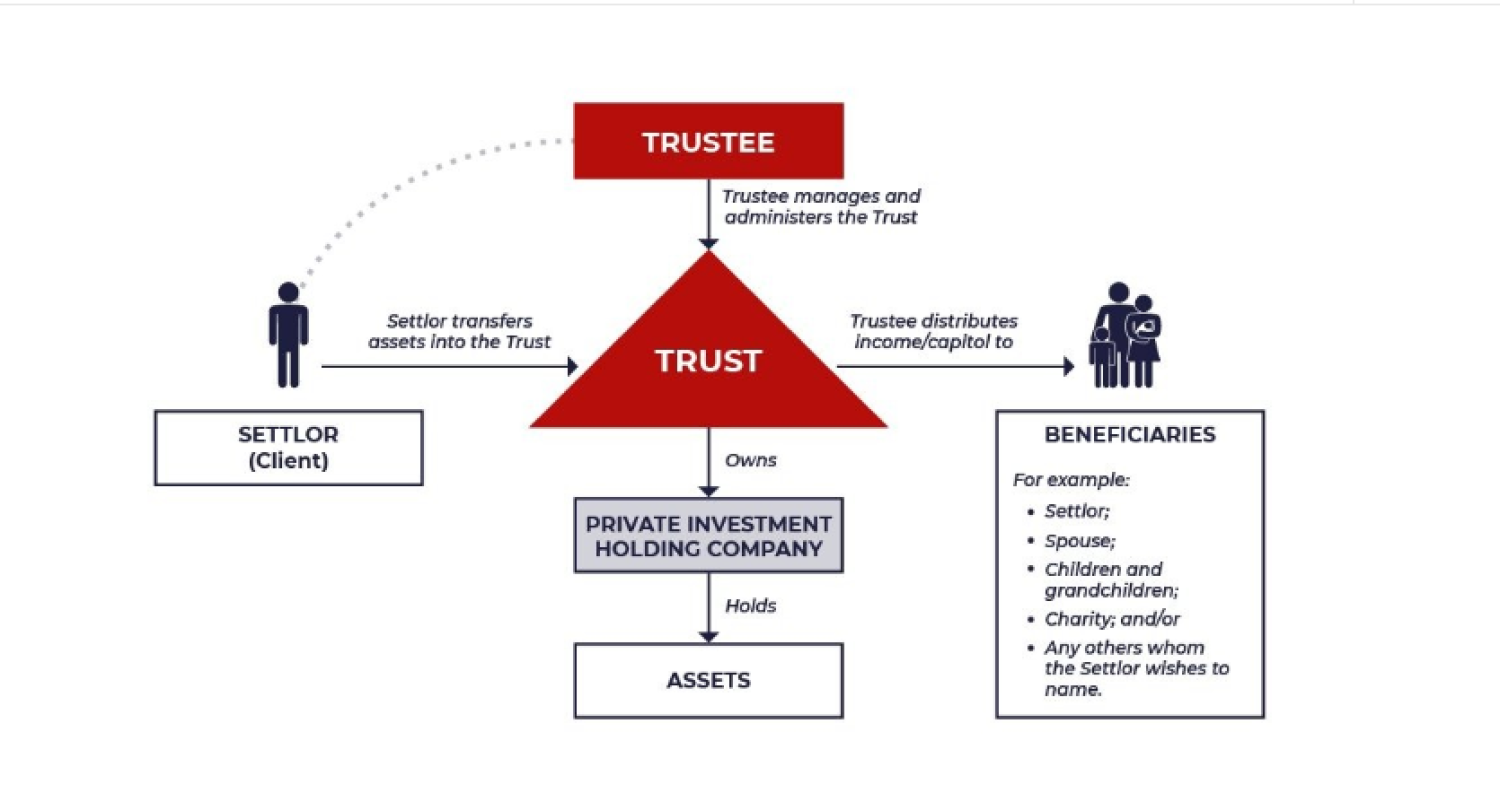
- A Private Trust is a trust established for the benefit of identified individuals such as Spouse, Children, Grandchildren and Future descendants. Unlike a public charitable trust, the benefits of a private trust are restricted to a specific group of family members.
- For business families, a private trust serves as a legal mechanism through which family wealth can be preserved and transferred without disrupting business operations.
Why Business Families Prefer Private Trusts
- Leading business families often use private trusts for the following reasons Succession planning, Asset protection, Family governance, Business continuity, Tax-efficient wealth transfer and Preservation of wealth across generations
- A properly structured trust ensures that family assets remain protected while simultaneously maintaining control and continuity of the family business.
Following are some of the peculiar characteristics of private trusts:
- Limited and Specific Beneficiaries: The private trust is formed for the benefit of limited individuals who are already, or within a certain period of time will be, ascertained.
- Governed by Indian Trusts Act, 1882: Like normal trusts, private trusts are also primarily governed by the Indian Trusts Act, 1882.
- Beneficiaries Can be Individuals or Families: A private trust is established for the benefit of an individual’s spouse, children or other family members. Therefore, the beneficiary can either be a single individual or even a group of individuals i.e., family.
- Written or Oral Trust: It is not mandatory to register a private trust. However, if it consists of an immovable property, then a written trust deed becomes mandatory.
Types of Private Trusts
Trusts can be classified based on two important criteria Power of revocation and Rights of beneficiaries
Revocable Trust : Under a Revocable Trust, assets are transferred to the trust, but the settlor retains the right to revoke the arrangement and reclaim the assets. Key Features
|
Particulars |
Details |
|
Ownership |
Assets transferred to Trust |
|
Right of Settlor |
Can take assets back |
|
Control |
Remains largely with Settlor |
|
Succession Planning |
Limited effectiveness |
Example : Suppose Mr. A transfers shares worth ₹50 Crore to a trust but retains the right to reclaim those shares at any time. Such a structure would be classified as a revocable trust.
Irrevocable Trust : In an Irrevocable Trust, the transfer of assets is permanent and cannot ordinarily be reversed. Key Features
|
Particulars |
Details |
|
Ownership |
Permanently transferred |
|
Revocation Rights |
Not available |
|
Asset Protection |
Strong |
|
Succession Planning |
Highly effective |
Example : A founder transfers shares of the family company into a trust and permanently relinquishes ownership. The trust thereafter becomes the legal owner of those shares.
Determinate (Specific) Trust
In a specific trust, the beneficiaries' shares are predetermined and clearly stated in the trust deed. Example
|
Beneficiary |
Share |
|
Son A |
40% |
|
Son B |
30% |
|
Daughter |
30% |
The trustee has no authority to alter these percentages.
Discretionary Trust : In a discretionary trust, beneficiaries are identified but their beneficial share is not fixed. Key Features
|
Particulars |
Details |
|
Beneficiary Share |
Not fixed |
|
Trustee Power |
High |
|
Distribution |
Determined by Trustee |
Example : If one child requires greater financial assistance due to medical or educational needs, the trustee may allocate a larger share to that beneficiary.
Most Popular Structure : For succession planning, the most commonly adopted structure is an Irrevocable Discretionary Trust, which combines strong asset protection with maximum flexibility.
The Trust Journey
The life cycle of a trust typically proceeds through six distinct stages:
|
Stage |
Activity |
|
Stage 1 |
Settlement of Trust |
|
Stage 2 |
Contribution of Assets |
|
Stage 3 |
Investment Management |
|
Stage 4 |
Income Generation |
|
Stage 5 |
Distribution of Income |
|
Stage 6 |
Distribution of Corpus / Dissolution |
Each stage carries separate legal and tax implications.
Taxation of Trusts: Stage-by-Stage Analysis
- Stage 1: Settlement of Trust: The initial creation of a trust may qualify for tax exemptions, provided the trust is established solely for the benefit of relatives. Important Condition: The beneficiaries should be relatives of the settlor. Failure to satisfy this condition may result in denial of tax benefits.
- Stage 2: Contribution of Assets: Once created, the settlor transfers assets into the trust.
- General Tax Position : Transfer of assets to the trust by the settlor is generally not treated as a taxable transfer.
- Family Trust Exemption : Where a trust is established exclusively for relatives, property received by the trust may qualify for exemption.
Important Judicial Precedent: Buckeye Trust Case
The Tribunal denied exemption because the trust deed permitted trustees to add unrelated beneficiaries in future.
- Key Learning : Drafting of beneficiary clauses is extremely important. Careless drafting can result in loss of valuable tax benefits.
- Investment Stage : After assets are transferred, trustees may invest trust funds in Shares, Mutual Funds, Bonds, Real Estate, Family Businesses and Other approved investment avenues. All investments must conform to the provisions of the trust deed.
- VS Trust Ruling : In the VS Trust case, the Tribunal accepted a retrospective amendment removing non-relative beneficiaries and granted tax exemption. The ruling highlights the importance of careful trust deed drafting and periodic review.
Income Generation and Distribution
Once investments start generating returns, the trust may earn:
|
Income Type |
|
Dividend Income |
|
Capital Gains |
|
Interest Income |
|
Business Income |
|
Rental Income |
Distribution of Income
One of the fundamental principles of trust taxation is that income appropriately taxed in the hands of trustees should generally not be taxed again when distributed to beneficiaries.
This prevents double taxation.
Trust as a Pass-Through Vehicle
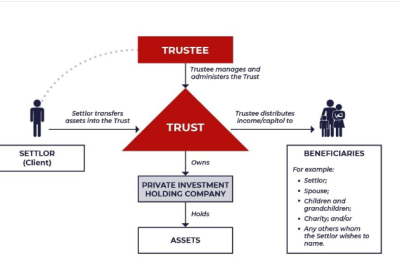
A private trust essentially acts as a bridge between:
Settlor
↓
Investments
↓
Trust
↓
Beneficiaries
Corpus Distribution and Trust Dissolution : At the end of the trust's life cycle, trust assets may be distributed among beneficiaries.
Important Question : Can the corpus distributed to beneficiaries be taxed again?
Judicial Position : Generally, the answer is No. Courts have recognized that beneficiaries receive trust assets in satisfaction of pre-existing beneficial rights and not as gifts or receipts without consideration. Important decisions include:
- Mrs. Sharon Nayak v. DCIT
- Ashok C. Pratap v. ACIT
- Jyotendrasinhji v. S.I. Tripathi
Quick Comparison of Taxation of Private Trusts
| Type of Trust | Beneficiary Shares | Revocable | Taxability |
|---|---|---|---|
| Revocable Trust | May be fixed or discretionary | Yes | Income taxed in hands of settlor |
| Irrevocable Specific (Determinate) Trust | Fixed and identifiable | No | Taxed in trustee's representative capacity or in beneficiaries' hands, generally at beneficiary rates |
| Irrevocable Discretionary Trust | Not fixed | No | Generally taxed at Maximum Marginal Rate (MMR) |
| Will Trust for Dependent Relatives | Fixed or discretionary | No | Taxed at AOP rates subject to specified conditions |
Key Takeaway: From a family succession and wealth preservation perspective, the irrevocable discretionary trust is the structure most commonly adopted by business families. It provides:
- Strong asset protection,
- Flexibility in wealth distribution,
- Better succession planning,
- Family governance benefits, and
- Long-term preservation of family wealth across generations.
However, careful trust structuring and drafting of the trust deed are crucial, as the tax treatment can vary significantly depending upon whether the trust is revocable or irrevocable, and whether beneficiary interests are determinate or discretionary.
Advanced Tax Issues in Private Trusts
Status of Trust
One of the most debated areas is determining the tax status of a trust.
- View 1 : A trust should not be treated as Association of Persons (AOP) and Body of Individuals (BOI) because beneficiaries do not come together for a common profit-making purpose.
- View 2 : A trust may be treated as an "Individual" for income-tax purposes. Several judicial precedents support this view.
Why It Matters : The status determines Tax rates, Deductions, Exemptions and Residential status
Residency of Trust : The Income-tax Act contains no specific provisions governing trust residency. The following factors become relevant:
Trustees : The location of trustees may influence residency.
Beneficiaries : Residential status of beneficiaries may also become relevant.
Place of Effective Management : The location where key decisions are taken plays a significant role.
Example : A trust with Indian trustees and Indian beneficiaries generally remains resident in India. Where foreign trustees or beneficiaries are involved, residency issues become substantially more complex.
Taxation of Private Trusts (Family Trust) – Summary
For income-tax purposes, private trusts are broadly classified into the following categories:
Taxation of Revocable Trust
In a Revocable Trust, the transfer is regarded as revocable where:
- There is a provision for re-transfer of the trust assets or income to the settlor, either directly or indirectly; or
- The settlor retains the power to reassume control over the trust assets or income.
In such cases, the trust is ignored for tax purposes, and the income generated by the trust assets is taxable directly in the hands of the settlor under the clubbing provisions of the Income-tax Act.
Taxation of Irrevocable Determinate (Specific) Trust
In an Irrevocable Determinate Trust:
- The beneficiaries are identifiable.
- Their shares in the trust income or corpus are fixed and ascertainable.
The trustee is assessed as a representative assessee, and tax is levied and recovered in the same manner and to the same extent as it would be from the beneficiaries themselves. Alternatively, the tax authorities may assess the beneficiaries directly.
Key Features
- The trustee assumes the tax status of the beneficiary whose share is being assessed.
- The trustee is entitled to claim deductions, exemptions, and allowances available to the beneficiary.
- Income is generally taxed at the rates applicable to the beneficiaries.
- However, where the trust earns business income, taxation is generally at the Maximum Marginal Rate (MMR).
Exception
Where the trust is:
- Created through a will,
- Exclusively for the benefit of dependent relatives, and
- It is the only trust created by the deceased person,
the trust may be taxed at the rates applicable to an Association of Persons (AOP) instead of MMR
Taxation of Irrevocable Discretionary Trust
In an Irrevocable Discretionary Trust:
- Either the beneficiaries or their shares are not specifically determined.
- The trustees decide the manner and quantum of distribution.
Key Features
- The trust is generally treated as having the status of an individual.
- Trustees assessed in a representative capacity can claim deductions and benefits available to individual beneficiaries.
- Income is ordinarily taxable at the Maximum Marginal Rate (MMR).
Exception
The MMR provisions do not apply where:
- The trust is created exclusively for the maintenance and support of dependent relatives; and
- It is the only trust established by the settlor for that purpose.
In such cases, the trust may be taxed at the rates applicable to an Association of Persons (AOP)
Special Rate vs. Maximum Marginal Rate (MMR)
An important controversy concerns taxation of special-rate income. Example : Suppose a trust earns:
- Long-Term Capital Gains taxable at 12.5%
- Dividend income
- Other special-rate income
Key Question : Should special rates continue to apply? Or should the entire income be taxed at Maximum Marginal Rate (MMR)?
Judicial Position : Some judgments support continuation of special rates, while others indicate that MMR may apply in certain situations. Accordingly, trusts earning capital gains and other special-rate income require careful tax analysis.
Surcharge on Private Trusts : Another contentious issue is surcharge computation.
Question : Should surcharge be based on Actual income of the trust, or Highest surcharge applicable under MMR?
Recent decisions have held that surcharge should generally be computed according to slab rates prescribed in the Finance Act.
Emerging Issue under the Income Tax Act, 2025
The removal of the phrase "if any" from the definition of maximum marginal rate has reopened the debate regarding automatic application of the highest surcharge rate. This area may witness further litigation in coming years.
Important Judgments
Araadhya Jain Trust
- Rose Trust : held that surcharge should be computed with reference to Finance Act slab rates.
- New Concern : The Income-tax Act, 2025 modified the definition of Maximum Marginal Rate (MMR). The removal of the phrase: "if any" may create an argument that the highest surcharge rate applies automatically.
Architecture of Family Governance:
This is the introduction to governance framework for family businesses. Purpose of Architecture of Family Governance to institutionalize family governance and avoid family disputes. Identifies four critical governance layers.
1. Cultural Layer
- Objective ; Define family values and identity.
- Tool : Family Charter
2. Governance Layer
- Objective: Create decision-making structures.
- Tools ; Family Constitution, Family Council and Family Assembly
3. Ownership Layer
- Objective ; Regulate ownership and succession.
- Tools : Family Trusts, Wills, HUF Structures
4. Conflict Management Layer
- Objective ; Resolve disputes efficiently.
- Tools : Family Settlement Agreements, Mediation and Arbitration
Final Takeaway
A Private Family Trust is not merely a tax-saving arrangement; it is the cornerstone of long-term family wealth management. It combines succession planning, governance, asset protection, business continuity, and conflict management into a single framework. It is a comprehensive framework designed to address the long-term needs of business families by providing:
- Wealth Preservation
- Succession Planning
- Asset Protection
- Family Governance
- Business Continuity
- Conflict Resolution
- Inter-generational Wealth Transfer
For large Indian business families, the most effective model is often:
Family Charter
↓
Family Trust
↓
Holding Company
↓
Businesses + Investments + Real Estate
↓
Future Generations
Such a structure creates continuity, protects family wealth, minimizes disputes, and ensures that the family legacy survives and prospers across multiple generations. For large Indian business families, the objective should not be merely to transfer assets, but to transfer values, governance, ownership, and wealth together. A properly structured Family Trust, supported by a Family Charter and a Holding Company structure, can ensure that the family's legacy continues to grow and prosper across generations