Table of Contents

CBDT to Display Foreign Financial Information in AIS: What NRIs, Returning Indians & Global Taxpayers Need to Know
CBDT will now display foreign financial information received under CRS, FATCA, and AEOI in AIS. Learn the impact on NRIs, RNORs, returning Indians, foreign asset reporting, DTAA, and tax compliance.
Introduction
In a significant step towards enhancing tax transparency and strengthening international tax compliance, the Central Board of Direct Taxes has authorized the Income Tax Department to display foreign financial information received under the Automatic Exchange of Information (AEOI) framework in taxpayers' Annual Information Statement (AIS). This move is expected to have a substantial impact on NRIs, Returning Indians (R2I), RNORs, OCIs, expatriates, and resident taxpayers holding foreign assets and overseas investments.
The objective is not to introduce any new tax but to improve visibility of foreign financial information already available with Indian tax authorities through international information-sharing agreements.
CBDT Update: Foreign Income Data to be Auto-Populated in AIS
CBDT has authorised the Director General of Income-tax (Systems) to upload information received under AEOI into the Annual Information Statement (AIS)—Form No. 168.
The order provides a framework for displaying foreign financial information already received from participating jurisdictions under global tax information exchange agreements.
Foreign financial information received by India from partner countries under international information-sharing arrangements will now be reflected in taxpayers' AIS.This may include information relating to Foreign bank accounts, Overseas investments, Foreign dividend income, Foreign interest income, Foreign securities and investment holdings, RSUs (Restricted Stock Units), ESOPs/ESPPs and Other reportable foreign financial assets and income shared under AEOI
Key Highlights
- The Central Board of Direct Taxes has authorised the DGIT (Systems) to upload AEOI information into AIS.
- Information received under international exchange agreements will become visible in taxpayers' AIS.
- Such information is required to be uploaded within 90 days from the end of the month in which it is received by the Income-tax department.
- DGIT (Systems) will prescribe the procedures, formats, and standards for uploading the information.
- The Central Board of Direct Taxes has authorised the Director General of Income Tax (Systems) to upload foreign financial information received under international information exchange arrangements into taxpayers' Annual Information Statements (AIS).
- The update covers information received for Calendar Year 2022, Calendar Year 2023, Calendar Year 2024 and Calendar Year 2025 and subsequent periods as received. The uploaded information will be made available according to procedures, formats, and standards prescribed by the Income Tax Department.
- This marks another important step in India's journey towards a technology-driven, risk-based tax administration that leverages international data-sharing mechanisms for improved compliance and transparency.
What Has CBDT Announced?
Key Highlights
- Foreign financial information will be visible in AIS.
- Data received under international information-sharing agreements will be uploaded by DGIT (Systems).
- Information must be uploaded within 90 days from the end of the month in which it is received.
- The Income Tax Department will prescribe the procedure, format and standards for such reporting.
- Information relating to Calendar Years 2022, 2023, 2024 and future periods may be displayed in AIS.
What is Automatic Exchange of Information (AEOI)?
- Automatic Exchange of Information (AEOI) is a global framework under which participating countries automatically exchange financial account information of taxpayers every year.
- India receives information through Common Reporting Standard (CRS), Foreign Account Tax Compliance Act (FATCA), Double Taxation Avoidance Agreements (DTAA) and Tax Information Exchange Agreements (TIEAs)
- India receives information through various international mechanisms, including:
- Common Reporting Standard (CRS)
- Foreign Account Tax Compliance Act (FATCA) with the United States
- Double Taxation Avoidance Agreements (DTAA)
- Tax Information Exchange Agreements (TIEAs)
- The objective of these agreements is to Enhance tax transparency, prevent tax evasion, Improve global tax cooperation and Ensure proper disclosure of foreign assets and overseas income. The objective is to Enhance tax transparency, Prevent tax evasion, improve international tax cooperation, and ensure proper reporting of cross-border income and assets.
What Foreign Information May Appear in AIS?
Depending upon information received from foreign jurisdictions, AIS may reflect details relating to:
- Foreign Bank Accounts: Account balances, account numbers, and Financial institution details
- Overseas Investments: Foreign brokerage accounts, Investment portfolios, Securities holdings
- Foreign Income: Interest income, Dividend income, Capital gains, Rental income
- Employee Stock Benefits: RSUs (Restricted Stock Units), ESOPs, ESPPs
- Foreign Retirement & Pension Accounts: 401(k), IRA, RRSP, SIPP, and Superannuation funds
- Other Reportable Assets: Custodial accounts, Insurance-linked investments and financial products reportable under CRS/FATCA
Impact on Foreign Asset Reporting
The AIS is gradually evolving beyond a statement containing only domestic tax information.
Taxpayers should now assume that information available under international reporting frameworks may be reflected within AIS over time. This increases the importance of accurate reporting in:
- Schedule FA (Foreign Assets) : Taxpayers required to disclose foreign assets must ensure all reportable holdings are correctly declared.
- Foreign Source Income Reporting: Interest, dividends, capital gains, and rental income must be appropriately disclosed wherever taxable.
- Foreign Tax Credit (FTC) Claims: Claims for taxes paid overseas should be supported by adequate documentation and proper reporting.
- DTAA Reporting : Benefits claimed under applicable Double Taxation Avoidance Agreements should be properly substantiated.
Why This Update Matters for NRIs
- Many NRIs continue to have financial transactions and investments in India as well as abroad.
- Even where an individual continues to qualify as an NRI, this development remains highly relevant. Many NRIs continue to maintain tax connections with India through common examples such as the sale of immovable property, rental income, capital gains, interest income, Indian securities, business income, and professional income. Indian stock market investments and Business income
- With global information exchange becoming more robust, tax authorities can now cross-verify disclosures more efficiently. With the integration of global information-sharing data and advanced analytics, tax authorities now possess greater visibility over domestic and international financial transactions. This means accurate reporting is becoming increasingly important.
- Maintaining proper disclosures and supporting records is therefore becoming increasingly important for avoiding unnecessary notices and compliance disputes.
Why Returning Indians Should Pay Special Attention
- Returning Indians often continue to hold foreign savings accounts, Overseas brokerage accounts, Employer stock compensation plans, Retirement accounts, mutual funds, and Foreign rental properties
- Many individuals assume, "My foreign assets are outside Indian tax authorities' reach." However, under international reporting frameworks, financial information can be shared and now may appear in AIS.
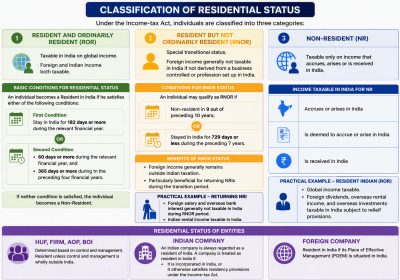
- As residential status changes from NRI to RNOR or Resident, taxability and disclosure obligations can change substantially.
Impact on Foreign Asset Reporting
The AIS is evolving beyond domestic tax reporting. Taxpayers should now ensure consistency between:
- Schedule FA: Foreign assets reporting in ITR.
- Foreign Income Disclosure: Interest income, Dividend income, Capital gains and Rental income
- Foreign Tax Credit (FTC) : Foreign taxes claimed as credit should match supporting documents.
- DTAA Claims: Treaty benefits should be backed by proper documentation and disclosures.
Impact on Taxpayers
- Increased Transparency: Foreign financial information may become visible directly in AIS.
- Easier Compliance Verification: Taxpayers can compare AIS information, Schedule FA, Foreign income disclosures and FTC claims
- Increased Scrutiny Risk: Any mismatch could lead to notices, scrutiny inquiries, reassessment proceedings, and verification requests.
Key Compliance Risks
Failure to reconcile foreign information may result in Income tax notices, Additional compliance queries, Delay in ITR processing, tax litigation, and Increased compliance costs
The focus should be on maintaining consistency between all tax filings and disclosures.
Practical Compliance Steps
Before filing the income tax return, taxpayers should:
- Review AIS Carefully: Check whether foreign information has been reported.
- Determine Correct Residential Status: Identify whether status is NRI, RNOR, Resident
- Reconcile Foreign Income: Compare AIS with Bank statements, Brokerage statements, dividend statements, and Pension statements
- Verify Schedule FA: Ensure all reportable foreign assets have been disclosed.
- Evaluate DTAA Benefits: Identify treaty relief available under applicable agreements.
- Claim Foreign Tax Credit: Maintain evidence of foreign tax paid.
-
Preserve Documentation: Maintain foreign tax returns, tax certificates, bank statements, investment records, and pension statements.
Future of International Tax Compliance in India
- This update represents another milestone in India's transition towards a technology-driven tax administration.
- Going forward, taxpayers can expect greater integration of global financial data, enhanced information sharing, stronger compliance monitoring, better detection of undisclosed assets, and increased scrutiny of cross-border transactions.
- AIS is rapidly becoming a comprehensive tax intelligence platform rather than merely a domestic tax information statement.
Key Takeaways
- CBDT has authorised the display of foreign financial information in AIS.
- Information received through CRS, FATCA, DTAA and AEOI frameworks may become visible in AIS.
- NRIs, RNORs, returning Indians, OCIs, and residents with overseas assets should review AIS carefully.
- Foreign bank accounts, investments, dividends, interest income, RSUs, ESOPs, and pension accounts may appear in AIS.
- Accurate reporting in Schedule FA, foreign income schedules and FTC claims is now more important than ever.
- Reviewing AIS before filing an ITR should become a standard compliance practice.
- Proper disclosure and documentation can help avoid notices, reassessment proceedings, and tax disputes.
- Greater transparency in reporting foreign income and assets.
- Easier detection of undisclosed overseas accounts and investments.
- Increased importance of reconciling foreign income disclosures with AIS before filing the income tax return.
- Better integration of information received through CRS, FATCA, and other international exchange mechanisms.
Conclusion
The CBDT's decision to display foreign financial information in AIS represents a major milestone in India's move toward a technology-driven and globally connected tax administration. While no new tax has been introduced, the visibility of overseas financial information has increased substantially. Taxpayers with foreign assets, investments, pensions, or income should proactively review and reconcile their disclosures to ensure full compliance and avoid future tax disputes.
How can RJA assist you?
Complex cross-border tax matters often require expert guidance. Rajput Jain & Associates provides specialized advisory services for NRI Taxation, Returning to India (R2I) Planning, RNOR Advisory, Foreign Asset Reporting, DTAA Advisory, Foreign Tax Credit (FTC), FEMA Compliance, International Taxation, and Cross-Border Wealth Structuring.
If you hold foreign bank accounts, overseas investments, RSUs, ESOPs, pension accounts, rental properties, or other global assets, professional guidance can help ensure accurate reporting and complete compliance with Indian tax laws. Then you need expert assistance.
Managing foreign income, overseas investments, residential status transitions, DTAA claims, Foreign Tax Credit (FTC), FEMA implications, and Indian tax reporting can be highly complex.
If you are an NRI, returning Indian, RNOR, OCI, expatriate, or resident with global financial interests, obtaining professional guidance can help ensure accurate reporting, minimize compliance risks, and optimize tax efficiency while remaining fully compliant with Indian tax laws.