Table of Contents
- Simplified Gst Registration Scheme – Rule 14a (cgst Rules, 2017)
- Gst Registration Scheme – Rule 14a (cgst Rules, 2017):
- Rule 14a Overview
- Key Features Of Rule 14a Under Cgst Rules, 2017 Simplified Registration
- How The New Process Simplified Gst Registration (scheme – Rule 14a) Works
- Benefits Of The Simplified Scheme

Simplified GST Registration Scheme – Rule 14A (CGST Rules, 2017)
GST Registration Scheme – Rule 14A (CGST Rules, 2017):
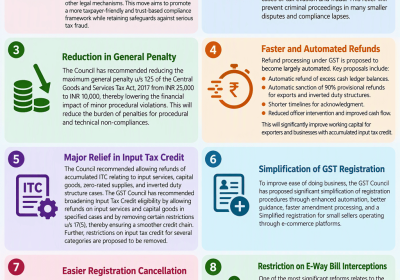
GST Rule 14A under CGST Rules, 2017 has been inserted to provide a simplified, risk-based GST registration mechanism, reducing documentation and physical verification requirements. This rule allows certain applicants to obtain GST registration quickly, based on self-declared information, Aadhaar authentication, and minimal verification through technology.
Rule 14A introduces a Simplified GST Registration Scheme focusing on minimal documentation, Aadhaar-based authentication, AI-driven risk profiling, Fast processing, Deemed approval, and simplified amendments. It is a major step toward improving the ease of doing business under GST.
Rule 14A Overview
- Eligibility: Any person who estimates that their total output tax liability on goods/services will not exceed INR2.5 lakh per month (including CGST, SGST/UTGST, IGST, and Compensation Cess) can opt for this scheme.
- Restriction: A person already registered under this rule in a State/Union Territory cannot obtain another registration in the same State/UT under the same PAN.
- This rule was introduced/amended via CGST (Fourth Amendment) Rules, 2024/2025 & Related changes in Rules 8, 9, 25, and new Rule 19A.
- Rule 14A Was Introduced To address Rampant delays in registration approvals, Excessive physical verifications, High compliance burden on small taxpayers, Need for ease of doing business, Support for startups/MSMEs.
Key Features of Rule 14A under CGST Rules, 2017 Simplified Registration
The simplified GST registration scheme under Rule 14A under the CGST Rules, 2017, facility is available to low-risk applicants, such as small businesses, professionals, individuals starting new businesses, home-based service providers, proprietorships, and entities with a clean compliance history. However, this simplified GST registration under Rule 14A under CGST Rules, 2017 is not available for high-risk categories identified by the GSTN or jurisdictional officer. Applicants who fail Aadhaar authentication & persons with past fraud cases or cancelled registrations. Following are the basic Key Features of Rule 14A under CGST Rules, 2017 Simplified Registration
(1) Reduced Documentation: Only essential documents are required Aadhaar authentication, PAN, proof of business place (electricity bill, rent agreement, etc.), Bank details (not compulsory at the time of application), photograph, and no additional declarations, affidavits, or financial details.
(2) No Physical Verification in Most Cases: Under Rule 25 under CGST Rules, 2017, physical verification is waived, except when Aadhaar authentication fails, Risk parameters flag the applicant, or the officer records specific reasons in writing.
(3) Aadhaar-based e-KYC: Aadhaar OTP authentication = instant, hassle-free registration. If Aadhaar is not authenticated, then application is routed for enhanced verification
(4) Real-Time Risk Scoring by GSTN : The portal uses AI/ML-based checks of PAN history, past compliance, address verification, bank connectivity, mobile/email consistency, and risk profiling of business activity. And low risk = approval within 3 working days.
(5) Fast Track Approval: Under Rule 9 under CGST Rules, 2017, the officer has 3 working days to approve or seek clarification. If no action deemed approval of registration is deemed.
(6) Withdrawal from Scheme : All returns due from the registration date till the withdrawal application date must be filed. Basic Conditions (a) Before 1 April 2026 then GST returns for a minimum of 3 months. & On or after 1 April 2026, then GST returns for a minimum of one tax period.
- No amendment/cancellation application should be pending.
- No proceedings under Section 29 (cancellation of registration) should be initiated or pending
Simplified Amendments Under Rule 19A under CGST Rules, 2017: Certain amendments (address change, email/mobile update, business details) can be made with self-declaration. OTP authentication. No physical verification (unless risk flagged).
How the New Process Simplified GST Registration (Scheme – Rule 14A) Works
While applying in FORM GST REG-01, select “Yes” under Option for Registration under Rule 14A. Aadhaar authentication is mandatory for the primary authorized signatory & At least one promoter/partner. GST registration is granted electronically within 3 working days from ARN generation, subject to Aadhaar authentication. Follows is step-by-step guidance under the Simplified GST Registration Scheme Rule 14A:
- STEP 1: Apply Online (GST REG-01) : Fill in basic details; Aadhaar authentication is done.
- STEP 2: Portal Risk Assessment: If it is a low-risk scheme which move for auto-approval
If high-risk, then trigger document demand/physical verification - STEP 3: Registration Approval: Instant/seamless for low-risk applicants; it will take a max of 3 days for scrutiny, & the officer must give reasons if delaying beyond 3 days.
- STEP 4: GSTIN Issued: Provisional GSTIN becomes active upon approval.
Benefits of the Simplified Scheme
This change to the GST Registration Scheme—Rule 14A (CGST Rules, 2017) comes up with the objective To simplify and fast-track GST registration for small taxpayers, low-risk applicants, and individuals/entities who face challenges with physical verification. Following are benefits of the Simplified GST registration Scheme
- Faster registration
- Very low documentation
- Reduced interface with department
- Technology-driven scrutiny
- Lower risk of rejection
- Encourages new businesses to enter the GST ecosystem
- Deemed approval ensures no discretionary delays