
GSTN puts proposed e-Way Bill changes on hold
Page Contents
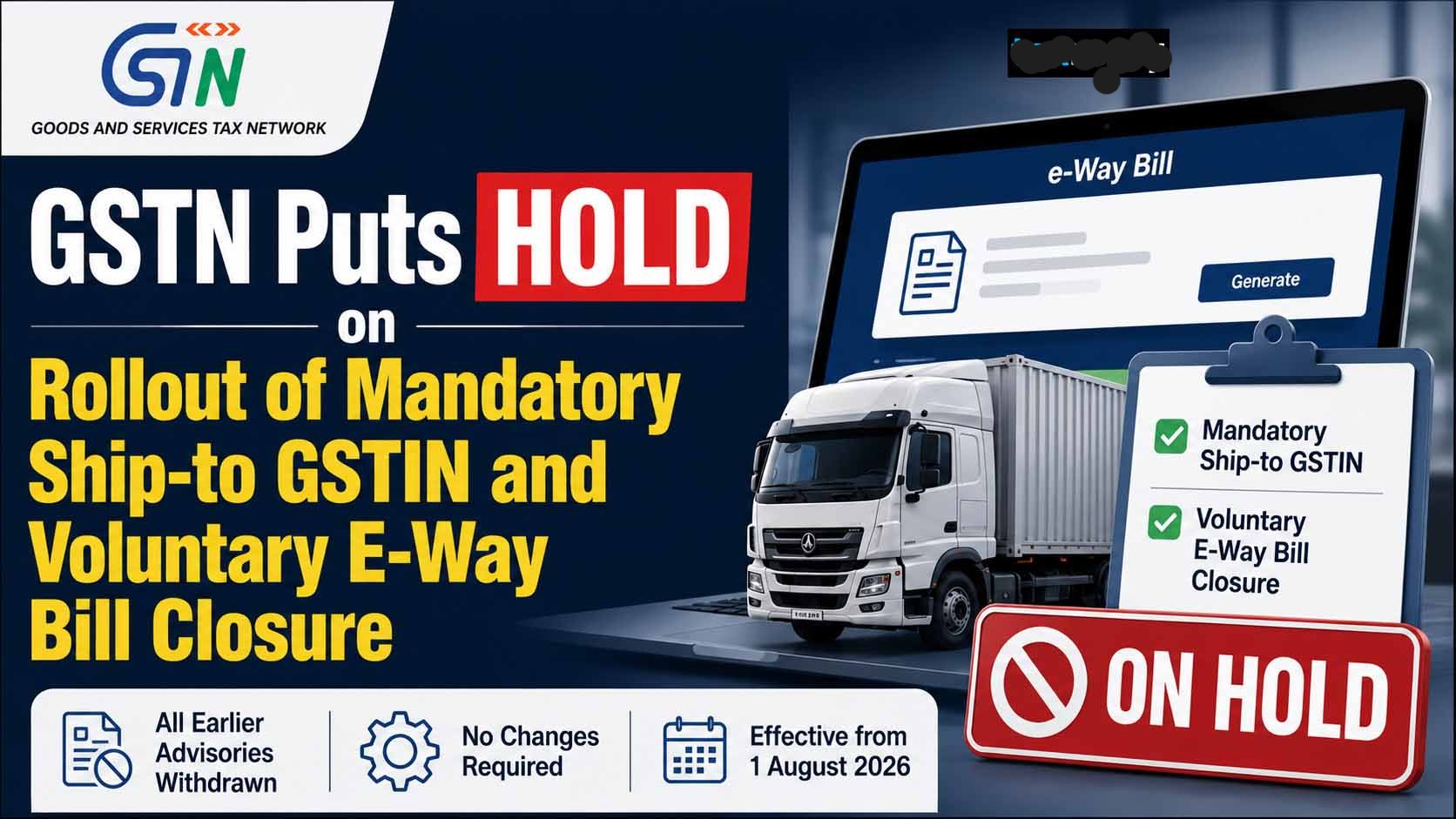
GSTN: E-Way Bill Enhancements (Ship-To GSTIN) hold next notice
GSTN advisory is significant because it would have introduced new mandatory data requirements and validation checks in the e-Way Bill and e-Invoice ecosystem from 1 August 2026. However, GSTN has now put these changes on hold until further notice after receiving representations from taxpayers, ERP vendors, GSPs, ASPs and other stakeholders regarding implementation challenges.
The GSTN advisories introducing these changes have now been withdrawn and placed on hold until further notice, meaning the proposed 1 August 2026 implementation is no longer applicable.
What does this mean?
The passage was originally warning businesses that:
- Ship-To GSTIN would become mandatory in specified e-Way Bill and IRN-based transactions.
- A missing or invalid Ship-To GSTIN could result in system rejection at the time of e-Way Bill generation.
- Businesses needed to update ERP systems, cleanse master data, and test integrations before 1 August 2026.
key message was that although the changes appeared minor, they could have had significant operational consequences because e-Way Bill validations are automated and real-time. A failed validation could potentially prevent goods from being dispatched.
What is the position now?
Following representations from trade and technology stakeholders, GSTN has put these enhancements on hold. The proposed requirements regarding:
- mandatory Ship-To GSTIN capture,
- new validation checks for Bill-To and Ship-To GSTINs, and
- voluntary closure of e-Way Bills,
will not be implemented until GSTN issues a fresh notification or advisory.
What were the proposed changes?
Mandatory capture of Ship-to GSTIN

GSTN proposed that in Bill-to / Ship-to transactions, the Ship-to GSTIN would become a mandatory field wherever e-way bill generation was required. If the consignee was unregistered, taxpayers would need to enter “URP” (Unregistered Person) instead. This requirement was to apply when:
- e-Invoice and e-Way Bill were generated together;
- e-Way Bill was generated using the IRN (Invoice Reference Number);
- Bill-to/Ship-to transactions; and
- Combined Bill-to/Ship-to and Dispatch-from transactions.
Additional system validations
GSTN also proposed stricter validations, including:
- Acceptance only of a valid Ship-to GSTIN.
- Rejection of invalid GSTINs.
- Prohibition on using the same GSTIN for both bill-to and ship-to parties in bill-to/ship-to transactions.
- Validation of State Code and PIN Code consistency with the Ship-to GSTIN.
These validations would have required businesses to modify their ERP and invoicing systems.
Voluntary Closure of e-Way Bills
Another proposed enhancement was the introduction of a Voluntary Closure Facility that would allow the supplier, recipient, transporter, or an authorised person to mark an e-Way Bill as closed after delivery of goods. GSTN had also introduced an API to enable such closure through ERP systems.
Why did GSTN defer the changes?
The Goods and Services Tax Network (GSTN) has deferred two proposed enhancements to the e-way bill system that were scheduled to take effect on August 1, following industry feedback regarding implementation challenges.
What changes have been deferred?
Industry stakeholders raised concerns regarding: The suspended proposals included:
- Mandatory capture of Ship-To GSTIN in specified Bill-to/Ship-to transactions.
- ERP and API modifications required within a short timeframe;
- Integration changes for e-Invoice and e-Way Bill systems
- New system validations for Ship-To GSTIN, State Code, and PIN Code.
- Additional compliance burden in Bill-to/Ship-to transactions; and
- Operational challenges in implementing the voluntary closure mechanism.
- Restrictions on using the same GSTIN for both Bill-To and Ship-To parties in certain scenarios.
- Introduction of a voluntary e-Way Bill Closure facility and related API changes.
Practical impact on taxpayers
Businesses do not need to rush ERP changes solely to comply with the proposed 1 August 2026 rollout. However, companies should still:
- review Bill-To/Ship-To transaction flows,
- maintain accurate customer and consignee master data,
- keep ERP and e-Invoice integrations ready for future changes, and
- Monitor GSTN advisories for any revised implementation timeline.
For now:
- No mandatory ship-to GSTIN requirement under the deferred enhancement.
- Businesses can continue operating under the existing e-Way Bill framework until a fresh implementation date is announced.
- No new GSTIN validation rules related to Bill-to/Ship-to transactions.
- There is no requirement to implement the Voluntary E-Way Bill Closure facility.
The compliance risk has been deferred, not eliminated. GSTN may reintroduce these changes after further consultation with stakeholders.
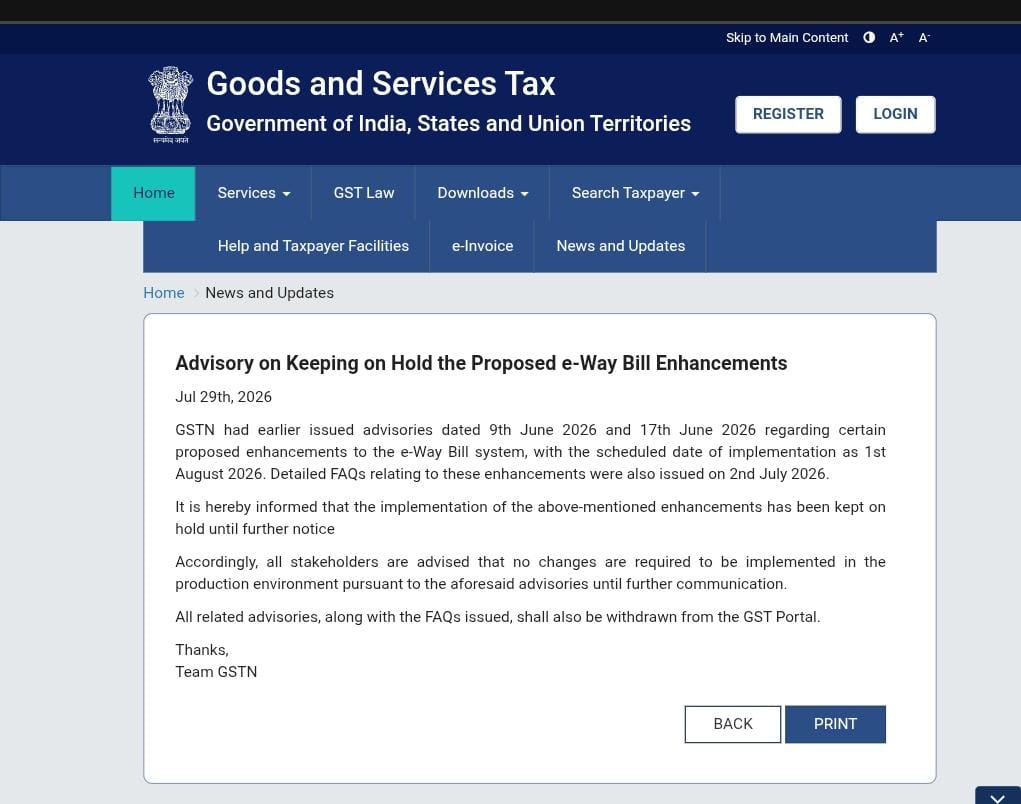
What does this mean for businesses?
- Businesses can continue operating under the existing e-Way Bill framework, while using the additional time to review transaction processes, strengthen master data quality and prepare their systems for any future rollout of these enhancements
- As a result, GSTN has withdrawn its advisories dated 9 June 2026 and 17 June 2026, and the proposed enhancements will not come into force on 1 August 2026. They remain on hold until GSTN issues further instructions.
- While the proposed e-Way Bill enhancements may appear limited in scope, they would have introduced important validation-based controls, particularly around mandatory capture of Ship-To GSTIN details and voluntary e-Way Bill closure. However, GSTN has now withdrawn its earlier advisories and placed these changes on hold until further notice following industry feedback on implementation challenges.
- The deferment provides welcome relief to businesses and software providers by avoiding a major system change from 1 August 2026. Taxpayers should, however, continue monitoring GSTN notifications, as these enhancements are only postponed, not cancelled, and may be reintroduced after further stakeholder consultation.