
ITR-3 vs ITR-4 (AY 2026-27): Quick Comparison
Page Contents
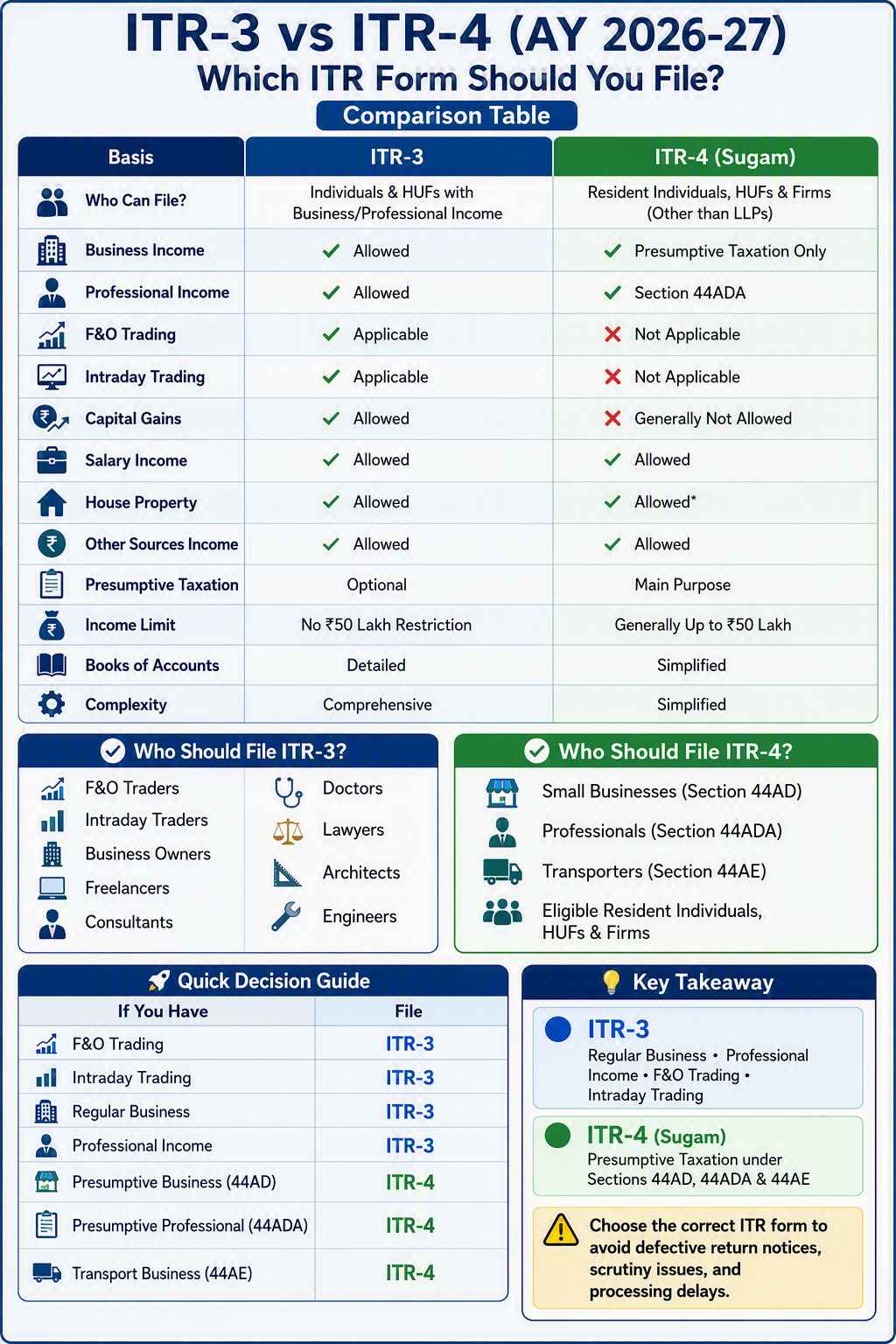
Quick Comparison: ITR-3 vs ITR-4 (AY 2026-27)
| Basis | ITR-3 | ITR-4 (Sugam) |
| Who Can File? | Individuals & HUFs having business or professional income | Resident Individuals, Resident HUFs and Resident Firms (other than LLPs) |
| Business Income | Allowed | Allowed under Presumptive Taxation Scheme |
| Professional Income | Allowed | Allowed under Section 44ADA |
| F&O Trading Income | Applicable | Not Applicable |
| Intraday Trading Income | Applicable | Not Applicable |
| Freelancers & Consultants | Applicable if not opting for presumptive taxation | Applicable if opting for Section 44ADA and eligible |
| Business Owners | Applicable under normal taxation | Applicable if eligible under Section 44AD/44AE |
| Capital Gains | Allowed | Generally Not Allowed |
| Salary/Pension Income | Allowed | Allowed |
| House Property Income | Allowed | Allowed (subject to conditions) |
| Income from Other Sources | Allowed | Allowed |
| Presumptive Taxation | Optional in eligible cases | Main purpose of the form |
| Turnover/Income Restriction | No specific ₹50 lakh limit for filing ITR-3 | Total income generally should not exceed ₹50 lakh |
| Books of Accounts | Detailed reporting required | Simplified reporting |
| Complexity | Detailed and comprehensive form | Simplified form |
Who Should Usually File ITR-3?
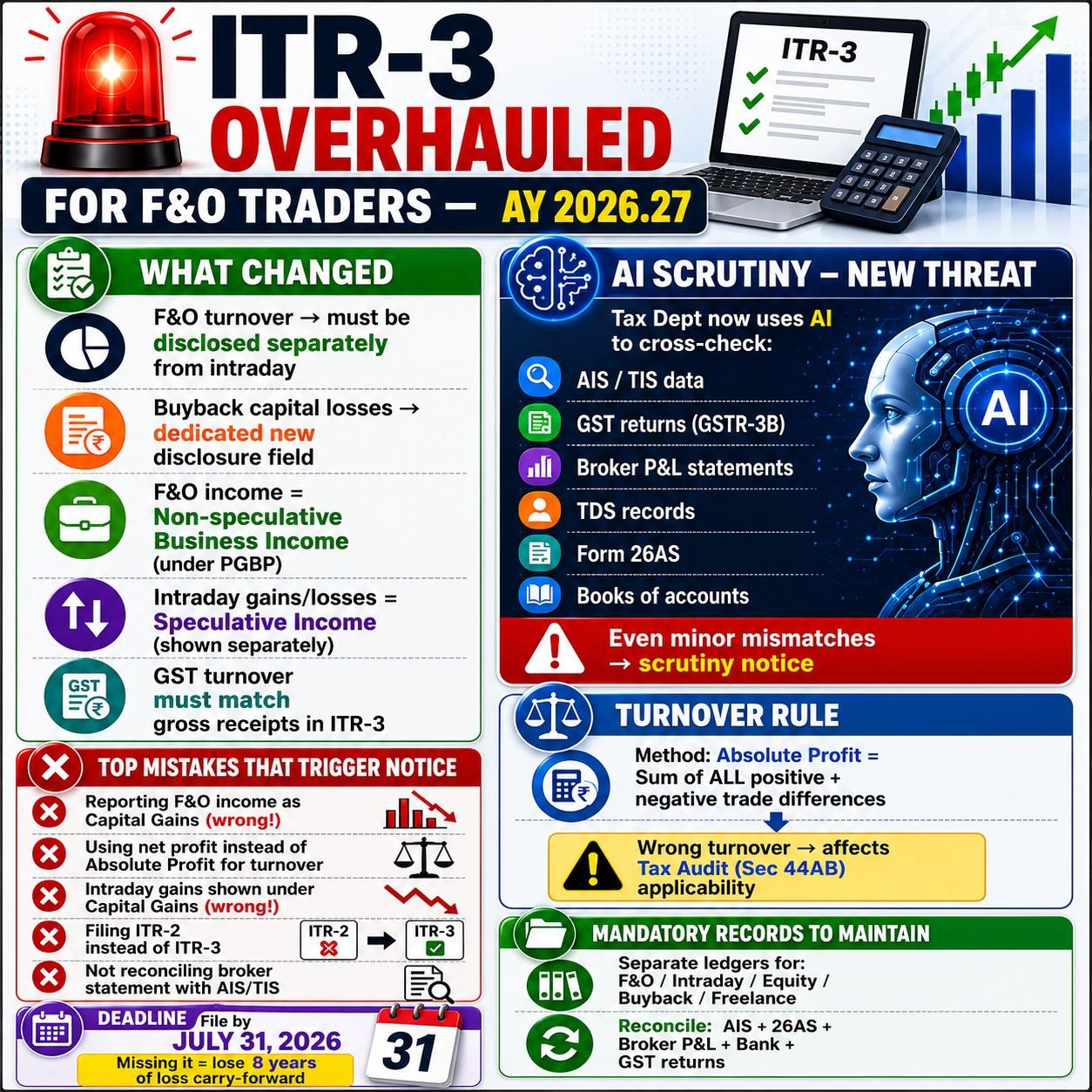
- F&O Traders
- Intraday Traders
- Business Owners under normal taxation
- Freelancers not opting for Section 44ADA
- Consultants under normal taxation
- Professionals such as Doctors, Lawyers, Architects, Engineers, etc. not using presumptive taxation
Who Should Usually File ITR-4?
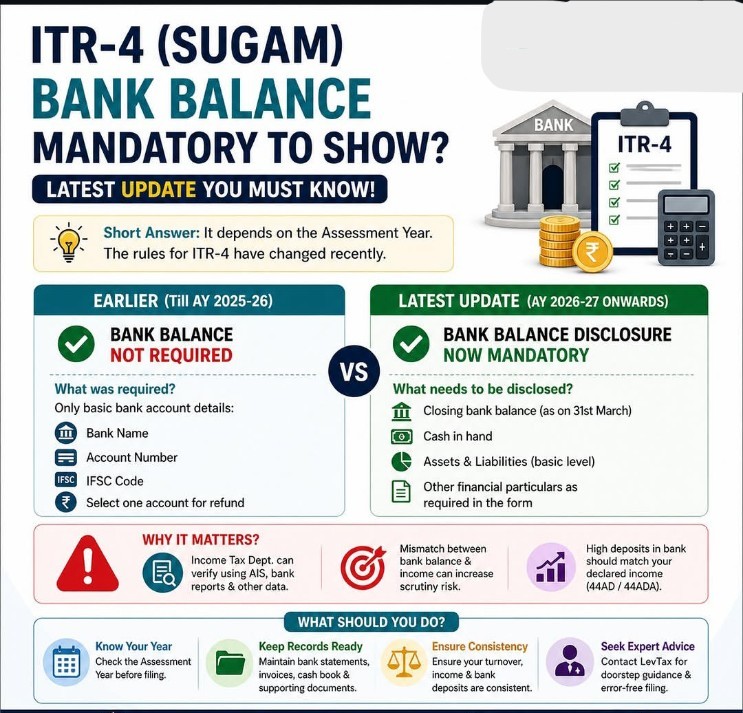
- Small Businesses opting for Section 44AD
- Professionals opting for Section 44ADA
- Transporters opting for Section 44AE
- Resident Individuals, HUFs and Firms (excluding LLPs) meeting eligibility conditions
| Simple Rule for filling of ITR form to be use – If You Have | File |
| · F&O Trading | · ITR-3 |
| · Intraday Trading | · ITR-3 |
| · Regular Business with Books of Accounts | · ITR-3 |
| · Professional Income under Normal Taxation | · ITR-3 |
| · Presumptive Business Income (44AD) | · ITR-4 |
| · Presumptive Professional Income (44ADA) | · ITR-4 |
| · Presumptive Transport Business (44AE) | · ITR-4 |
Can You Revise Your ITR for AY 2026-27?
- If you discover any mistake, omission, incorrect income disclosure, deduction claim, tax calculation error, or mismatch in TDS details after filing your Income Tax Return (ITR), you can file a Revised Return subject to the provisions of the Income Tax Act.
- For Assessment Year 2026-27, a revised return can generally be filed up to 31 March 2027 or before the completion of the assessment, whichever is earlier. This allows taxpayers to rectify genuine errors and ensure accurate tax compliance.
Is AY 2026-27 covered under the new Income Tax Act, 2025?
- AY 2026-27 relates to income earned during FY 2025-26 and continues to be governed by the Income Tax Act, 1961. The new Income Tax Act, 2025 applies to income earned from April 1, 2026, onwards.
- A revised return can be filed to correct Income reporting errors, Wrong tax regime selection (where permitted), Incorrect deduction or exemption claims, TDS/TCS mismatches and Omitted income or disclosures
- Filing a revised return helps avoid future notices and compliance issues.
- However, taxpayers should not treat revision as a substitute for careful filing. Before submitting the original return, verify Income from all sources, Deductions and exemptions, Tax regime selection, TDS/TCS credits, Bank account details, supporting documents, and disclosures
File Your ITR Before the Due Date
ITR filing for FY 2025-26 (AY 2026-27) is currently active. Taxpayers required to file ITR-3 or ITR-4 should ensure that their returns are filed on or before the applicable due date to avoid interest, late fees, and loss of certain tax benefits.