
Code on Social Security 2020: Employer Compliance Guide 2026
Page Contents
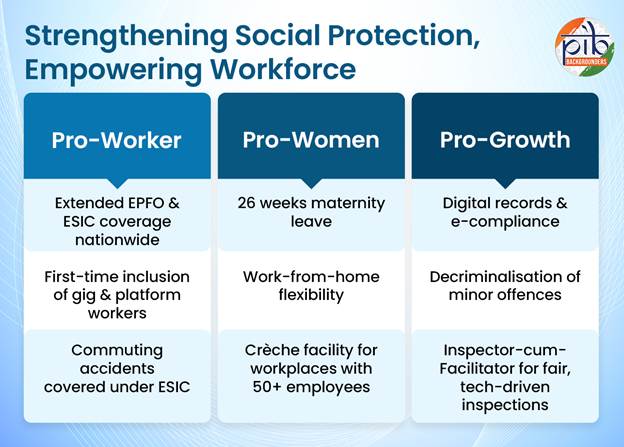
All About the Code on Social Security, 2020: Employer Compliance Guide 2026
What is the meaning of “Code on Social Security, 2020 ?
The Code on Social Security, 2020, is one of India’s four labour codes that consolidates multiple employee welfare and social security laws into a single framework. It governs key employee benefits such as Provident Fund (PF), Employee State Insurance (ESI), gratuity, maternity benefits, employee compensation, and social security for certain gig and platform workers.
The Code on Social Security, 2020, replaces and consolidates major legislation, including
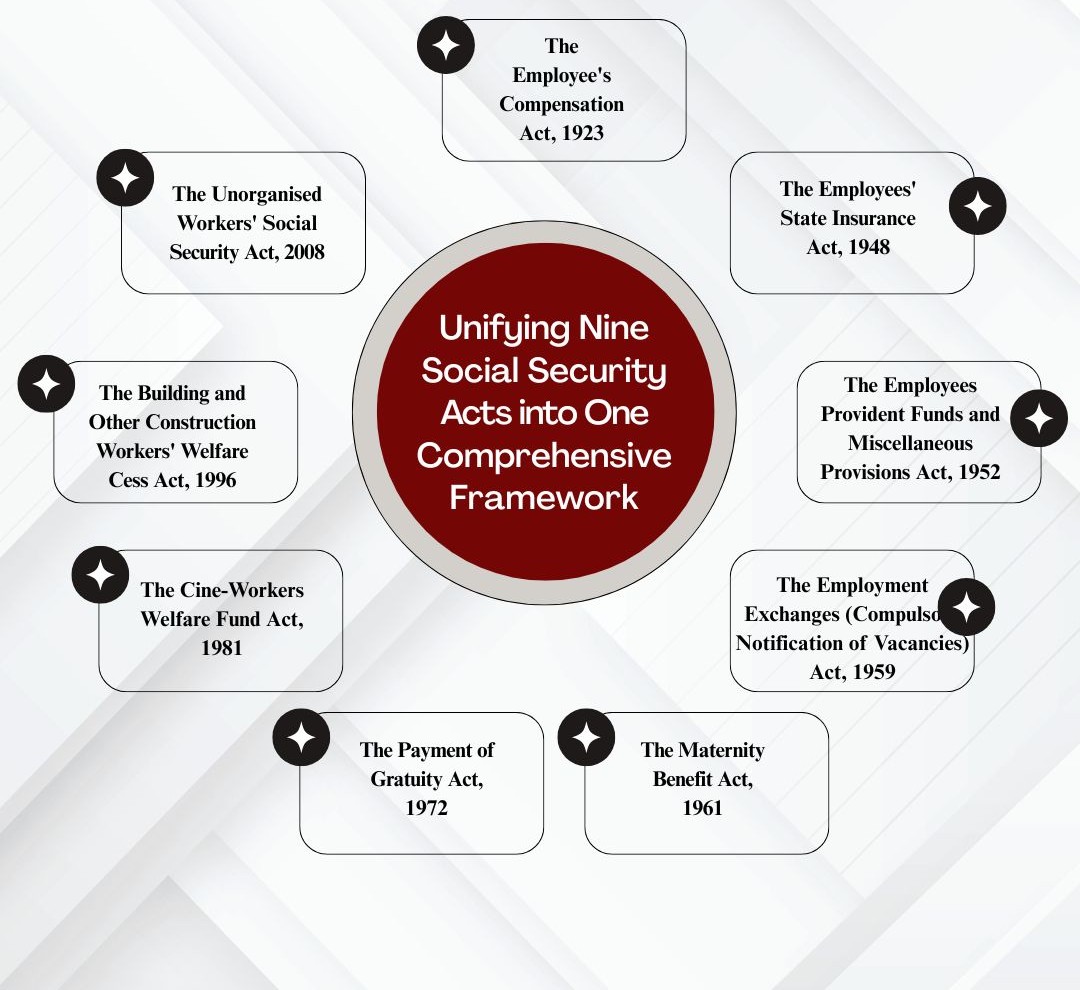
- Employees’ Provident Funds and Miscellaneous Provisions Act, 1952
- The Employees’ State Insurance Act, 1948
- Payment of Gratuity Act, 1972
- Maternity Benefit Act, 1961
- Employee Compensation Act, 1923
- Unorganised Workers’ Social Security Act, 2008
With the notification of the Social Security Rules, 2026, employers are expected to face greater compliance obligations relating to:
- Payroll and wage structuring
- PF and ESI compliance
- Employee benefit administration
- Statutory documentation and record maintenance
- Worker registration and social security coverage
- Digital filings and annual returns
- Compliance monitoring and reporting requirements
As multiple labour welfare laws are now governed under a unified social security framework, businesses should strengthen their HR, payroll, compliance, documentation, and record-keeping systems to ensure timely compliance, reduce legal risks, and effectively manage employee benefits under the new regime.
Summary of Key Provisions of the Social Security Rules
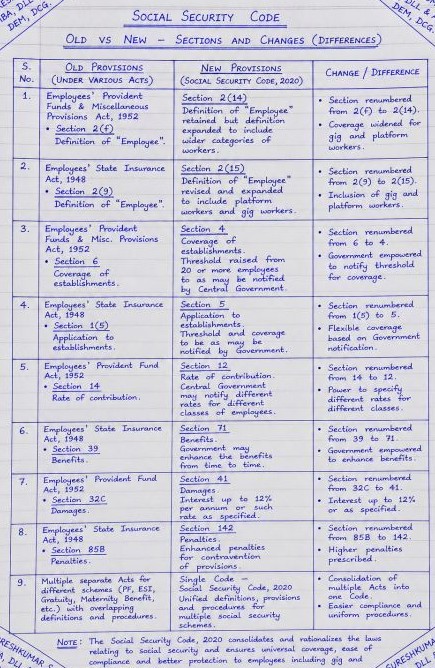
The notified Social Security (SS) rules provide the operational framework for implementing the Code on Social Security, 2020. The major provisions are summarized below:
1. Employees’ Provident Fund (EPF) and Employees’ State Insurance (ESI)
- Employers seeking exemption from EPF or ESI provisions must obtain consent from the majority of employees and provide self-certified evidence of compliance and contribution payments.
- Exemption/inapplicability applications will be deemed approved if authorities do not decide them within 60 days.
- Establishments cannot normally opt out of EPF/ESI coverage until 5 years have elapsed from the date the provisions became applicable.
- Even after exemption, employers must continue complying with specified conditions, maintain records, submit returns, and obtain fresh approvals in certain restructuring situations.
2. Employee Compensation
- Detailed procedures have been prescribed for:
- Reporting workplace accidents.
- Filing compensation claims.
- Adjudication and payments through specified forms and electronic platforms.
- Delayed compensation payments beyond 30 days attract 12% annual simple interest (or a notified rate).
- Mechanisms have been introduced for inter-state and international transfer of compensation claims and records.
- Competent authorities can demand accident reports, records, and transfer of compensation funds when necessary.
- Employers must inform employees, both in writing and electronically, about their compensation rights in a language they understand.
- Organizations may need stronger systems for accident reporting, claim management, and compliance documentation.
3. Gratuity
- Employees must submit gratuity nominations in Form III within 90 days of completing one year of service.
- Employers must verify and return attested nomination copies within 30 days.
- Gratuity claims:
- Employees/nominees: within 30 days from gratuity becoming payable.
- Legal heirs: within 1 year.
- Delayed applications may still be accepted for valid reasons.
- Fixed-term employees become eligible for gratuity after completing one year of service.
- Employers must:
- Accept or reject a claim within 15 days.
- Pay gratuity within 30 days after admitting the claim.
- Gratuity disputes should generally be resolved within 6 months, extendable by 3 additional months.
4. Maternity Benefit and Crèche Facilities
Maternity Benefits
- Prescribed forms and medical certificates are required for claiming benefits.
- In case of the employee’s death:
- Benefits payable to nominees/legal heirs must be paid within 2 months.
- Nursing break wages must be paid within 48 hours of certificate submission.
Crèche Facilities
- Mandatory for establishments employing 50 or more workers.
- Crèches should generally be located within 1 kilometre of the workplace.
- Detailed standards have been prescribed regarding:
- Infrastructure
- Staffing
- Working hours
- First-aid facilities
- Feeding arrangements
- Minimum space requirements
Crèche Allowance
- Employers may provide a crèche allowance instead of a physical crèche through agreement with employees or unions.
- Minimum allowance: INR 500 per month per child.
- Usually available for up to two children.
Nursing Breaks
- Each nursing break: 15 minutes.
- Additional travel time up to 15 minutes depending on distance to the crèche.
5. Building and Other Construction Workers (BOCW) and Cess
Project Information
- Employers must furnish project information in Form XV within 60 days of commencement.
- Any changes must be reported within 30 days.
Advance Cess Payment
- Construction cess must be paid in advance based on self-assessment.
- Cost calculations should be based on:
- CPWD rates
- State PWD rates
- Notified schedules
- RERA project costs
Project Changes
- Stoppage or reduction of work must be reported within 60 days.
- Project completion must be reported within 60 days.
- Refunds are available for excess cess in certain cases.
Assessments and Appeals
- Employers have 30 days to respond to scrutiny notices.
- Appeals against assessments or penalties must be filed within 90 days.
Worker Registration
- Eligible construction workers must be registered within 30 days of eligibility.
- Aadhaar-linked registration and Universal Registration Numbers are required.
- Inter-state migration updates must be completed within 30 days.
6. Social Security for Unorganised, Gig and Platform Workers
Unorganised Workers
- Workers aged 16 years and above must self-register using Aadhaar.
- Governments will issue:
- Digital identity cards
- Universal Account Numbers (UANs)
Gig and Platform Workers
- Aggregators must register workers within 45 days of rule commencement.
- Worker onboarding and exits must be updated daily or in real time through electronic systems.
Eligibility for Benefits
A worker must generally have:
- At least 90 days of engagement with one aggregator; or
- 120 cumulative days across multiple aggregators during the previous financial year.
Aggregator Contributions
- Provisional contribution return: by 30 June each year.
- Final audited return and balance contribution: by 31 October.
Refunds and Interest
- Refund claims for excess contributions must be processed within 90 days.
- Delay in contribution attracts 1% interest per month or part thereof.
7. Employment Information and Vacancy Reporting
Vacancy Reporting
- Public sector employers must report vacancies to Career Centres before recruitment.
- Private establishments with 20 or more employees may also be required to report vacancies when notified.
Timelines
- Regional Career Centre vacancies: at least 15 days before application closing date.
- Central Career Centre vacancies: at least 40 days before application closing date.
Selection Results
- Employers must report recruitment outcomes within 30 days of selection.
Employment Information Returns
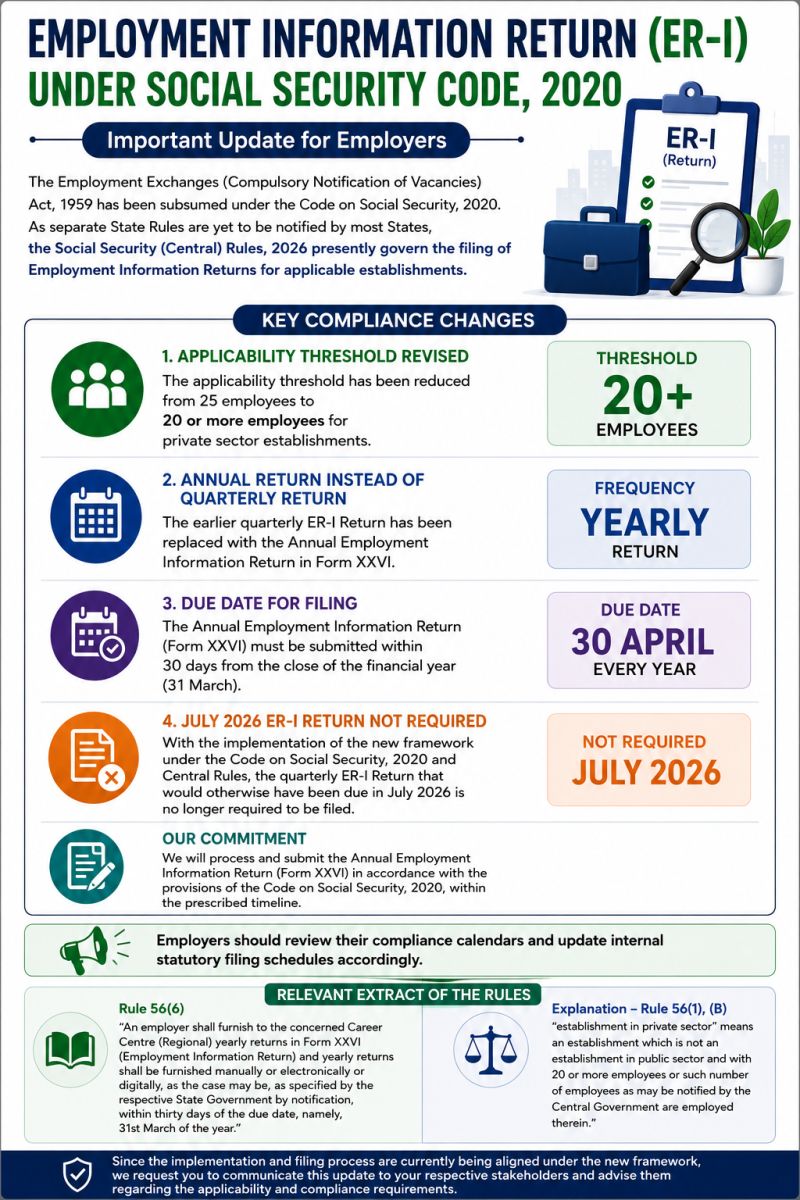
- Governments may require employers to maintain records relating to Workforce strength, Recruitment, Vacancies, Occupational categories, Future manpower requirements.
- Annual Employment Information Return (Form XXVI) must be filed each year.
8. Registers, Records and Annual Returns
Employers must maintain prescribed records, including:
- Employee register.
- Attendance and muster roll.
- Wage, overtime & deduction registers.
- Register of women employees.
Key compliance requirements:
- Records may be maintained electronically.
- The records must be preserved for 5 years.
- Wage slips must be issued on or before wage payment.
- Records should be available within the workplace or within 3 km of it.
- Employers must display details of the authorized compliance officer.
- Annual unified returns for gratuity and maternity benefit provisions must be filed by 28/29 February every year.