
Major Relief : No Notices Below INR 10,000 & Halt on Arrests
Page Contents
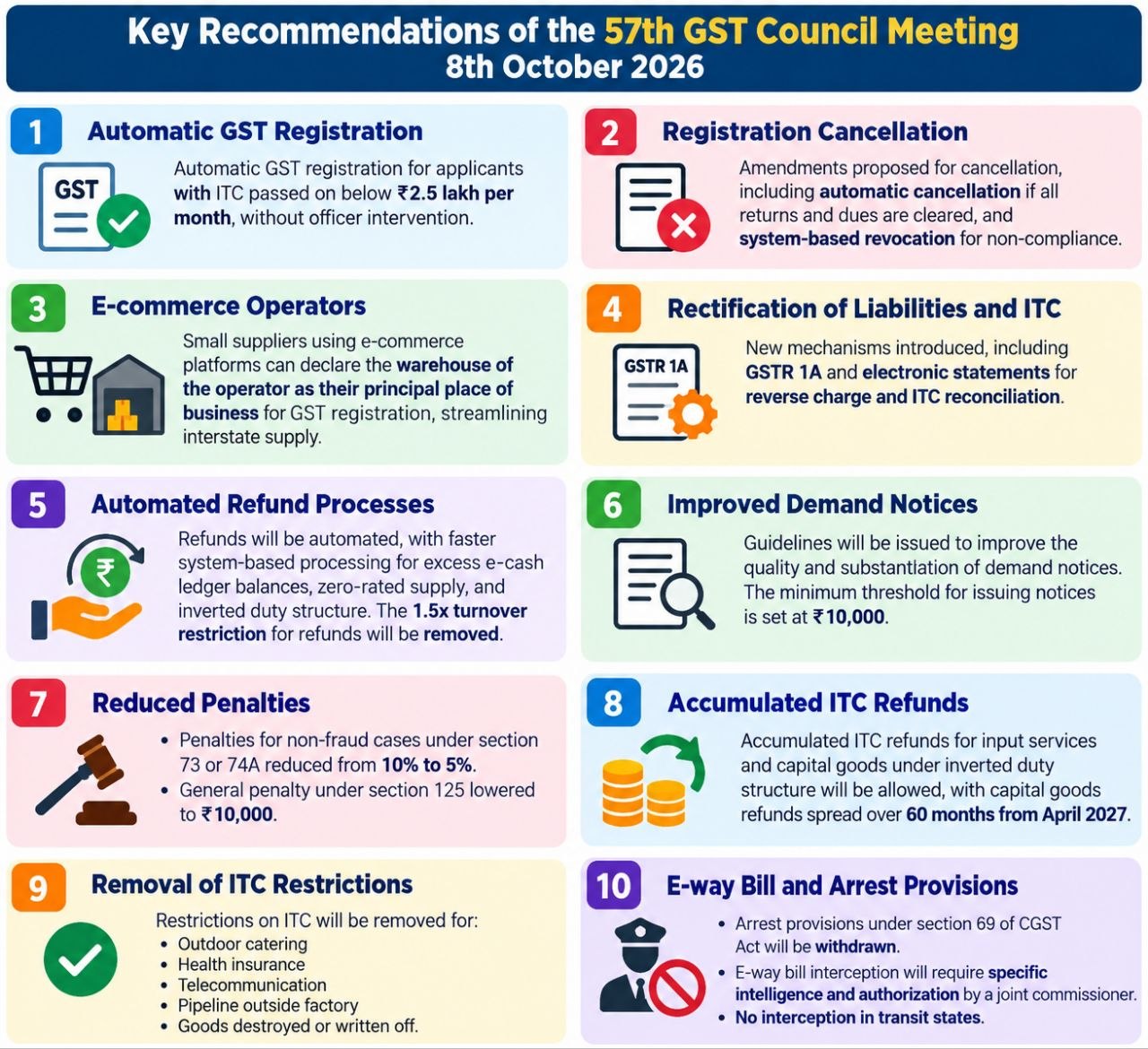
Major Relief for Taxpayers: No Notices Below INR 10,000 & Halt on Arrests
GST Relief Measures: Major Relief for Taxpayers as GST Council Recommends No Notices Below INR 10,000 & Halt on Arrests
- In a significant taxpayer-friendly move, the 57th GST Council has recommended that GST demand notices shall not be issued where the tax amount involved is below INR 10,000. Further, pending notices involving tax demands below this threshold are proposed to be withdrawn, reducing unnecessary litigation and compliance burden for small taxpayers.
- Adding to this relief, the Central Board of Indirect Taxes and Customs has reportedly issued interim administrative instructions dated 30 October, directing field formations to refrain from making arrests under GST provisions until corresponding amendments are incorporated into the CGST Act. Officers have also been advised to restrict arbitrary or routine vehicle inspections and focus only on cases involving credible intelligence or substantial revenue risk.
- Most of the statutory amendments recommended by the GST Council are expected to become effective from 1 April 2027, subject to the necessary legislative changes. Until then, taxpayers may rely only on the interim administrative relief measures issued by the authorities.
Key Recommendations of the GST Council on No Notices Below INR 10,000 & Halt on Arrests
The Council has proposed several major reforms aimed at easing compliance and reducing the fear of criminal proceedings under GST:
- No GST notices for tax amounts below INR 10,000
- Withdrawal of pending notices involving demands below INR 10,000
- Suspension of GST arrests through interim administrative instructions
- Restriction on random interception and inspection of goods vehicles
- Proposed removal of arrest powers under GST law
- Increase in prosecution threshold from INR 1 crore to INR 5 crore
Why This Matters for Taxpayers and Professionals
The proposed changes provide substantial relief, particularly to small and medium businesses that often face litigation over minor tax differences. These measures are expected to reduce compliance costs, avoid unnecessary departmental proceedings, and improve ease of doing business.
Following Action Points for Taxpayer to No Notices Below INR 10,000 & Halt on Arrests
- Review Pending GST Notices: Identify clients having pending Show Cause Notices (SCNs) where the tax demand is below INR 10,000. Prepare suitable representations seeking withdrawal or closure of such proceedings.
- Advise Clients Facing Enforcement Action: Inform clients who have received summons or are facing investigation about the interim direction restricting arrests. Ensure clients continue to cooperate with departmental proceedings despite the relief measures.
- Monitor Legislative Amendments: Track amendments to the CGST Act and related notifications. Update compliance procedures once the recommendations are formally enacted.
- Review Ongoing Litigation: Evaluate whether pending disputes involving small tax demands can be disposed of or withdrawn in light of the proposed reforms.
These recommendations signal a clear shift towards a less punitive and more facilitative GST regime. While the proposed legal amendments are awaited, taxpayers can immediately benefit from the administrative guidance limiting arrests and enforcement actions. Tax professionals should proactively review pending cases, advise affected clients, and remain prepared for the implementation of the new framework from 1 April 2027.