
Building a Robust Audit Manual for CA Firms : Implementation
Page Contents
Building a Robust Audit Manual for CA Firms: From Design to Implementation
In today’s increasingly regulated audit environment, maintaining a well-documented and consistently implemented audit manual is no longer a best practice alone; it is a professional and regulatory necessity. An audit manual serves as the foundation of a firm’s quality management framework, ensuring that audits are conducted consistently, ethically, efficiently, and in compliance with applicable standards and laws.
This blog explains the two critical stages of developing and implementing an audit manual and why every chartered accountant (CA) firm should prioritize this initiative.
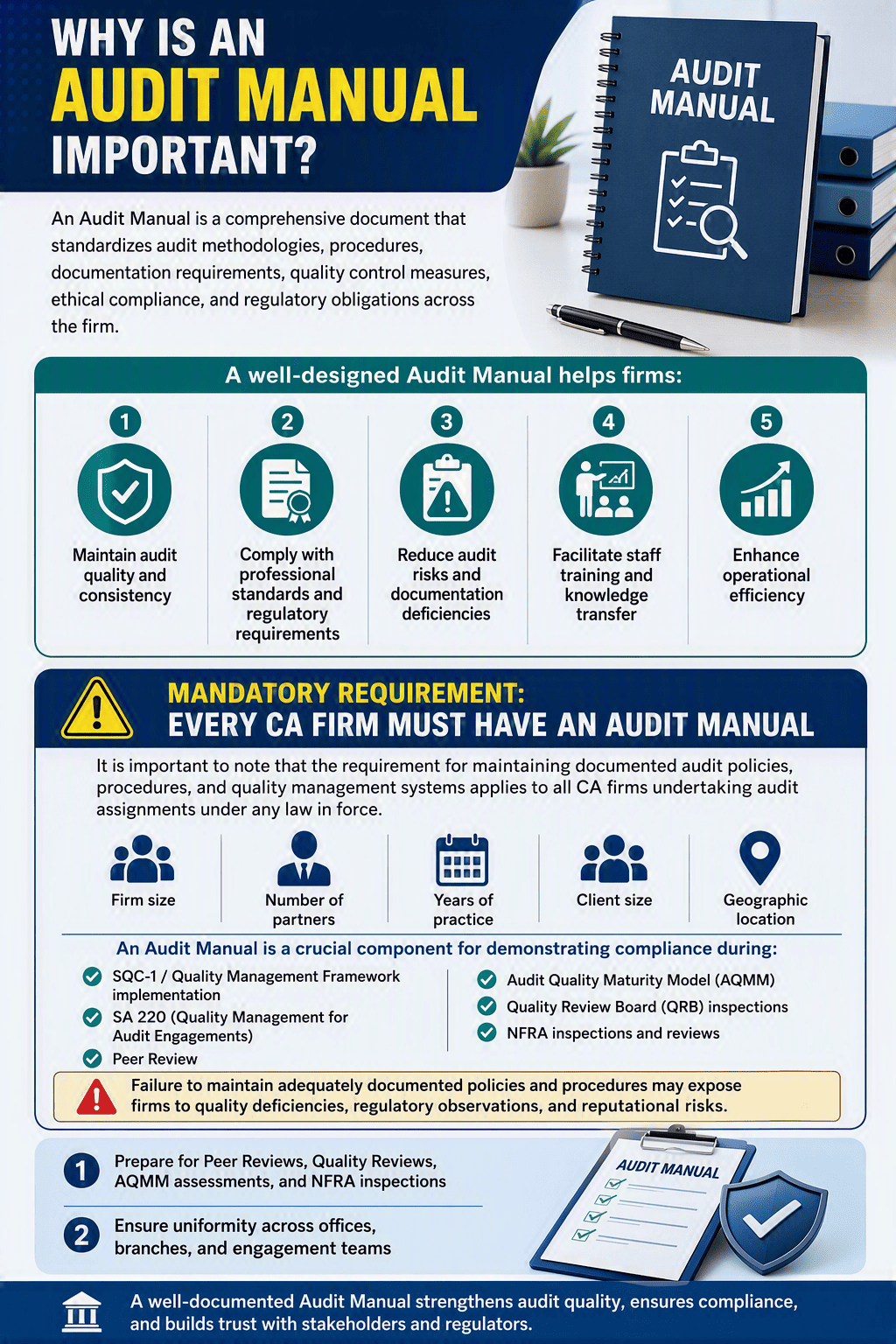
Why is an audit manual important?
An audit manual is a comprehensive document that standardizes audit methodologies, procedures, documentation requirements, quality control measures, ethical compliance, and regulatory obligations across the firm. A well-designed audit manual helps firms:
- Maintain audit quality and consistency
- Comply with professional standards and regulatory requirements
- Reduce audit risks and documentation deficiencies
- Facilitate staff training and knowledge transfer
- Enhance operational efficiency
- Prepare for Peer Reviews, quality reviews, AQMM assessments, and NFRA inspections
- Ensure uniformity across offices, branches, and engagement teams
Stage 1: Audit Manual Design (One-Time Exercise)
The first stage focuses on creating a customized audit manual aligned with the firm’s operations, audit practices, and regulatory obligations.
Step 1: Existing Process Understanding:
Before drafting the manual, it is essential to understand how the firm currently operates. Key Activities of Existing Process Understanding
- Discussions with partners and senior management
- Review of existing audit methodologies
- Understanding client portfolio and industry exposure
- Evaluation of documentation practices
- Analysis of internal quality control procedures
- Identification of gaps against Standards on Auditing (SAs), Code of Ethics, and Quality Management Standards
Outcome: A comprehensive understanding of the firm’s current audit ecosystem and areas requiring standardization and improvement.
Step 2: Drafting of Manual
Based on the findings from the process review, a customized audit manual is prepared. Following Typical Contents of the Manual:
- Firm Governance: Organizational structure, roles and responsibilities, and authority matrix
- Audit Methodology: Client acceptance and continuance, risk assessment procedures, audit planning, execution procedures, documentation requirements, and reporting protocols
- Quality Management Framework: Independence policies, Ethical requirements, human resource policies, Engagement quality reviews, and monitoring mechanisms
- Standard Templates: Checklists, working paper formats, declaration formats, review notes, and reporting templates
- Outcome: A draft audit manual tailored to the firm’s size, practice areas, and regulatory requirements.
Step 3: Discussion on Draft Manual
The draft manual is presented to the firm’s leadership for review and discussion.
- Key Objectives: Validate practicality of procedures, align responsibilities with organizational structure, Address operational challenges, Incorporate partner feedback and ensure regulatory compliance
- Benefits: Creates ownership among stakeholders, improves adoption and implementation, and ensures realistic and practical procedures
- Outcome: Refined draft incorporating firm-specific suggestions and operational considerations.
Step 4: Finalization and Delivery
Following discussions and revisions, the Audit Manual is finalized and formally issued.
- Deliverables: Final Audit Manual, Standard Operating Procedures (SOPs), Audit checklists, Documentation templates, Compliance registers, and Monitoring mechanisms
- Outcome: The firm receives a comprehensive quality management framework ready for implementation.
Stage 2: Audit Manual Implementation (Regular and Ongoing Process)
An audit manual creates value only when it is effectively implemented and continuously updated. This stage ensures that the manual remains relevant and actively supports quality audit execution.
-
Maintenance and Updation
Regulatory and professional standards are continuously evolving.
- Activities: Updating procedures for amended Standards on Auditing, incorporating ICAI, NFRA, and government notifications, revising audit methodologies, and updating templates and checklists
- Benefits: Continuous compliance, reduced regulatory risks and up-to-date audit practices
-
Training Sessions for Firm Staff
Even the best manual is ineffective if staff members are not adequately trained.
-
- Topics Covered: Audit methodology, documentation standards, ethical compliance, quality management procedures, and regulatory developments.
- Benefits: Improved competency, better audit quality, and reduced implementation gaps
-
Hands-on Support and Handholding
Practical implementation support is often required during the initial phases.
-
- Activities: Assistance in applying audit procedures, Working paper reviews, documentation guidance, Troubleshooting compliance issues and branch and division standardization
- Benefits: Uniform execution across teams, consistent documentation quality, and faster adoption of firm-wide standards
-
Managing Firm-Level Quality Activities
Effective quality management extends beyond individual audit engagement. Key Areas:
-
- Independence Management: Annual independence declarations, conflict of interest monitoring, and compliance tracking
- Internal Inspection: Quality reviews of completed engagements, identification of deficiencies. Corrective action monitoring.
- Firm-Level Monitoring: Compliance reviews, quality control assessments, and documentation audits
- Benefits: Stronger governance framework and enhanced compliance culture
-
Files and Records Review with Reporting
Regular monitoring ensures compliance with prescribed standards.
-
- Activities: Review of engagement files, evaluation of documentation adequacy, compliance testing, observation reporting, and corrective action recommendations
- Benefits: Improved audit quality, early detection of deficiencies, and enhanced readiness for external reviews
-
Peer Review Handling
Peer review is an important quality assurance mechanism for CA firms.
-
- Support Includes: Readiness assessment, Documentation review, Gap analysis, Evidence compilation, Peer Reviewer coordination, and Closure of review observations
- Benefits: Smooth peer review process, reduced compliance concerns and better quality ratings
-
Consultation Support
Audit and assurance engagements often involve complex professional judgments.
Consultation Areas:
-
- Code of Ethics
- SQC-1 and SQM frameworks
- Standards on Auditing
- Chartered Accountants Act, 1949
- ICAI Regulations
- Independence and objectivity issues
- Professional misconduct matters
Benefits:
-
- Better risk management
- Consistent interpretation of regulations
- Enhanced professional compliance
-
Regulatory Filing Support
Certain regulatory filings require ongoing compliance and monitoring. Areas of Assistance:
-
- NFRA Filings: NFRA-2 preparation and filing support
- ICAI Compliance: Ethical Standards Board requirements and professional compliance matters
- PMLA Compliance: Internal procedures, record maintenance, and reporting obligations
- Benefits: Timely compliance, reduced regulatory exposure, and better governance practices
Mandatory Requirement: Every CA Firm Must Have an Audit Manual
It is important to note that the requirement for maintaining documented audit policies, procedures, and quality management systems applies to all CA firms undertaking audit assignments under any law in force. This requirement is relevant irrespective of firm size, number of partners, and years of practice. Client size and geographic location. An audit manual is a crucial component for demonstrating compliance during:
- SQC-1 / Quality Management Framework implementation
- SA 220 (Quality Management for Audit Engagements)
- Peer Review
- Audit Quality Maturity Model (AQMM)
- Quality Review Board (QRB) inspections
- NFRA inspections and reviews
Failure to maintain adequately documented policies and procedures may expose firms to quality deficiencies, regulatory observations, and reputational risks.
Benefits of Implementing an Audit Manual
-
Ensures Uniformity Across the Firm
An Audit Manual establishes standardized practices across all offices, departments, and partners operating under the same FRN. This consistency enhances audit quality and minimizes variations in professional judgment and execution.
-
Strengthens Risk Management
Documented processes help safeguard partners and the firm from risks arising due to non-compliance or professional lapses by any individual team member or partner.
-
Protects the Firm’s Reputation
A robust quality control system helps reduce the risk of regulatory actions, adverse peer review observations, disciplinary proceedings, and reputational damage that may arise from audit deficiencies.
-
Improves Audit Quality
Standardized procedures enable audit partners and managers to effectively supervise and review work performed by staff, ensuring completeness, accuracy, and compliance with professional standards.
-
Enhances Staff Training and Development
The Audit Manual serves as a practical learning guide for junior team members. It provides clarity on expectations, methodologies, documentation standards, and quality requirements, reducing dependence on informal training alone.
-
Facilitates Technology and Automation
A documented and structured audit process creates a strong foundation for implementing audit software, workflow automation tools, document management systems, and other digital solutions in a cost-effective manner.
-
Supports Regulatory Reviews
During Peer Reviews, QRB inspections, NFRA reviews, or other regulatory examinations, a well-maintained Audit Manual demonstrates the firm’s commitment to quality management and professional excellence.
Conclusion
An audit manual is much more than a compliance document. It is a strategic tool that enhances audit quality, promotes consistency, strengthens governance, and prepares firms for the evolving expectations of regulators and stakeholders. While designing the manual is a one-time exercise, its successful implementation requires continuous maintenance, training, monitoring, and improvement.
For CA firms seeking sustainable growth, improved audit quality, and regulatory preparedness, investing in a professionally designed and effectively implemented Audit Manual is no longer optional. It is an essential pillar of modern audit practice.