
DPDP Act, 2023: 7 Major Penalty Areas Business Should Know
Page Contents
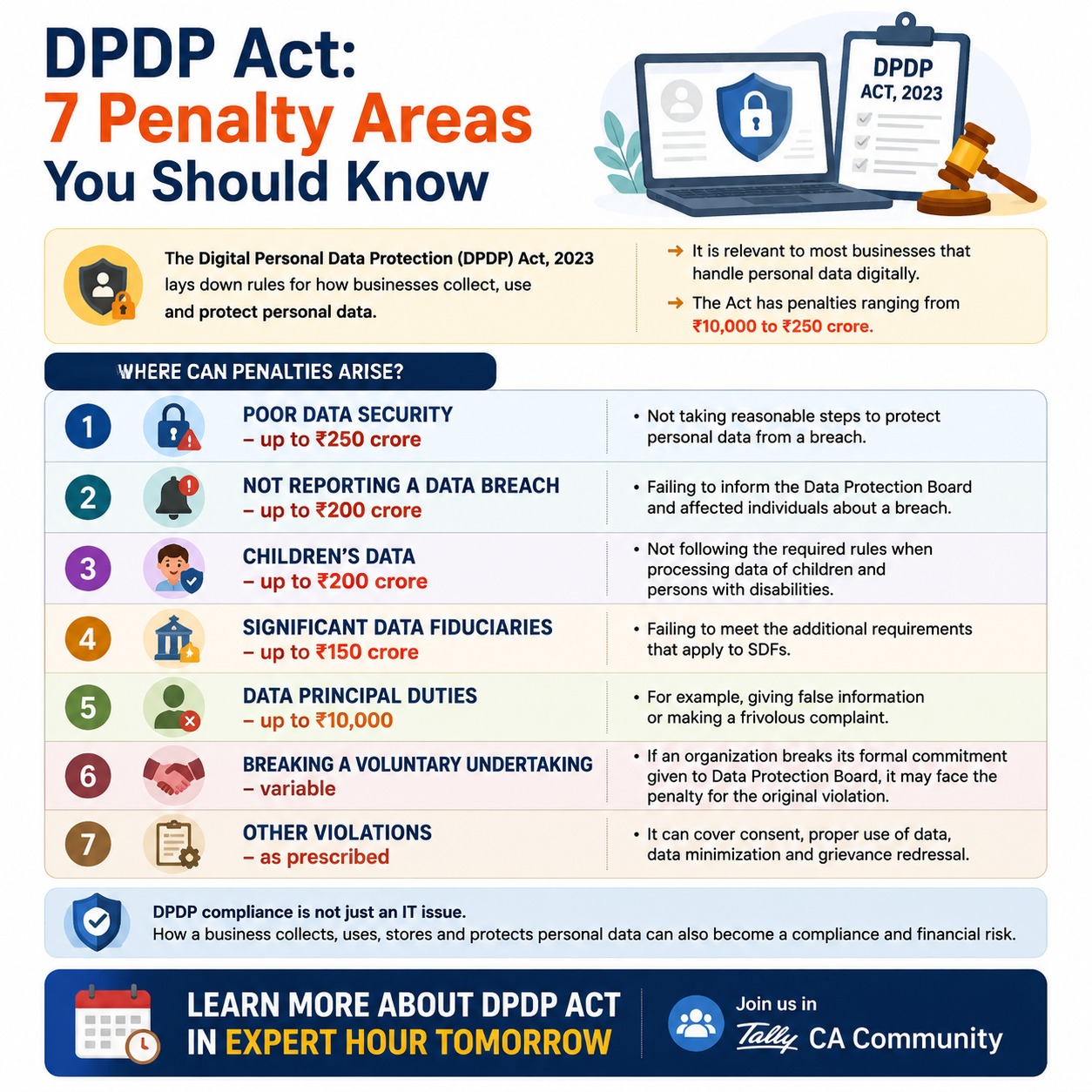
DPDP Act, 2023: 7 Major Penalty Areas Every Business Should Know
- The Digital Personal Data Protection Act, 2023, marks a significant step in India’s data privacy framework. The law governs how organizations collect, process, store, and protect digital personal data and applies to businesses, startups, professionals, e-commerce platforms, and other entities that handle personal information digitally.
- With penalties ranging from INR 10,000 to INR 250 crore, non-compliance can create substantial financial and reputational risks for organizations.
Why the Digital Personal Data Protection Act, 2023, Matters
- Today, businesses routinely collect personal information such as customer names and contact details, email addresses, employee records, financial information, user account data, and online transaction records.
- The Digital Personal Data Protection Act, 2023, requires organizations to process such information responsibly, transparently, and securely.
1. Failure to Implement Adequate Data Security Measures
Penalty: Up to INR 250 Crore: The highest penalty under the Digital Personal Data Protection Act, 2023, may be imposed where an organization fails to take reasonable security safeguards to protect personal data. Examples include:
- Weak cybersecurity controls
- Unauthorized access to data
- Data leaks due to poor security practices
- Inadequate system protection
Businesses must implement robust technical and organizational measures to prevent personal data breaches.
2. Failure to Report a Personal Data Breach
Penalty: Up to INR 200 Crore: In the event of a personal data breach, organizations are required to notify the Data Protection Board of India and affected individuals, where applicable. Failure to report a breach within the prescribed framework can result in significant penalties. Examples include:
- Concealing a cyberattack
- Delayed breach reporting
- Failure to notify affected users
3. Non-Compliance in Processing Children’s Data
Penalty: Up to INR 200 Crore : Special obligations apply when processing personal data relating to children and persons with disabilities requiring lawful guardianship support. Organizations must comply with enhanced protection requirements and obtain the necessary consent before processing such data.
4. Violations by Significant Data Fiduciaries (SDFs)
Penalty: Up to INR 150 Crore: Certain organizations may be classified as Significant Data Fiduciaries (SDFs) based on factors such as volume of personal data processed, risk to individuals, and impact on national interests. SDFs are subject to additional compliance requirements, including:
- Appointing a Data Protection Officer
- Conducting periodic audits
- Maintaining compliance mechanisms
Failure to meet these obligations may attract substantial penalties.
5. Breach of Duties by Data Principals
Penalty: Up to INR 10,000: The Digital Personal Data Protection Act, 2023, also imposes responsibilities on individuals (data principals). Penalties may apply for providing false information, impersonation, and filing frivolous or malicious complaints. Although comparatively small, these provisions discourage misuse of the complaint process.
6. Violation of a Voluntary Undertaking
Penalty: Variable organizations may provide a voluntary undertaking to the Data Protection Board to address non-compliance issues. However, if the organization subsequently breaches that undertaking, it may face penalties relating to the original violation, potentially leading to significant financial consequences.
7. Other Data Protection Violations
- Penalties as Prescribed: The Digital Personal Data Protection Act, 2023, also covers a range of other compliance obligations, including valid consent management, lawful processing of personal data, data minimization practices, purpose limitation, grievance redressal mechanisms, and data retention and deletion requirements.
- Failure to comply with these obligations may result in penalties as determined under the Act.
Digital Personal Data Protection Act, 2023 Compliance Is More Than an IT Function
- A common misconception is that data protection is solely the responsibility of the IT department.
- In reality, Digital Personal Data Protection Act, 2023, compliance affects multiple business functions: management, human resources, marketing teams, finance departments, customer support functions, and technology teams.
- Every organization must evaluate how personal data is collected, stored, processed, shared, and secured throughout its operations.
Key Takeaway
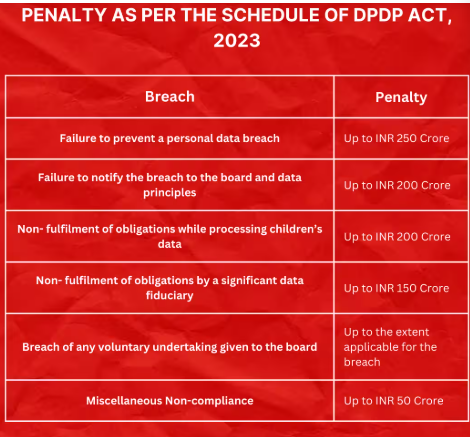
The Digital Personal Data Protection Act, 2023, introduces a strong data protection framework with penalties ranging from INR 10,000 to INR 250 crore. Businesses should proactively review their data governance practices, implement security safeguards, establish breach response procedures, and ensure lawful handling of personal information. As regulatory enforcement evolves, data privacy will increasingly become both a compliance requirement and a critical business risk management priority