Page Contents
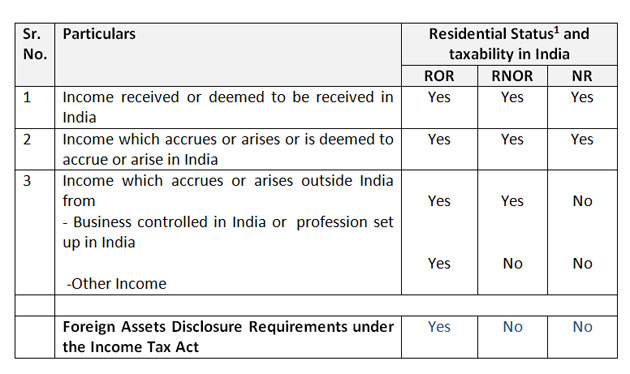
Tax incidence on an assessee depends on his residential status. For instance, whether an income, accrued to an individual outside India, is taxable in India depends upon the residential status of the individual in India.
Similarly, whether an income earned by a foreign national in India (or outside India) is taxable in India, depends on the residential status of the individual, rather than on his citizenship.
Therefore, the determination of the residential status of a person is very significant.
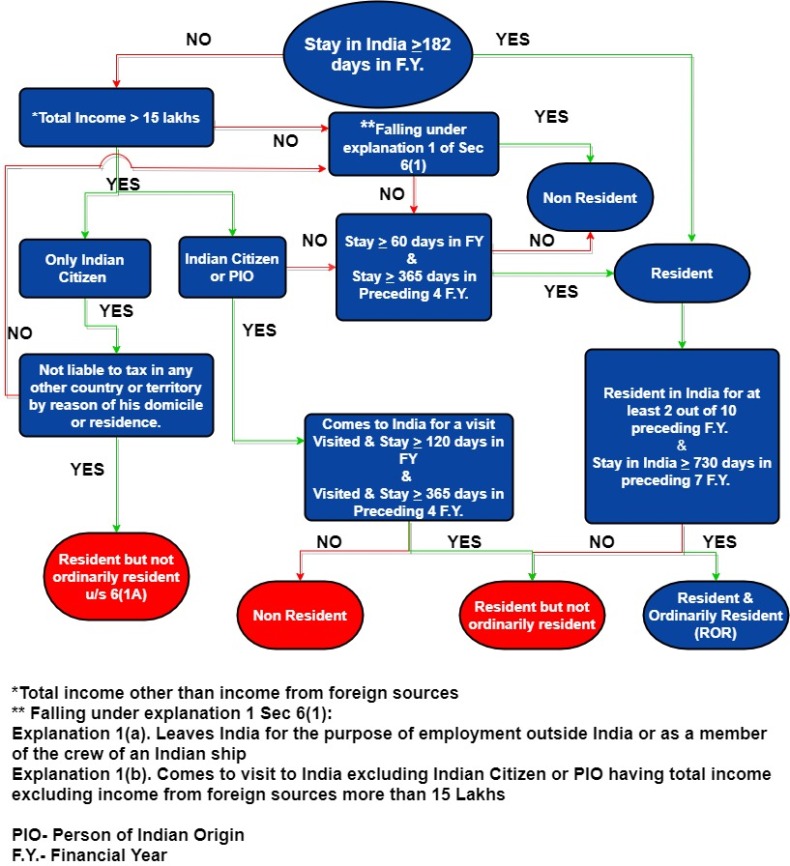
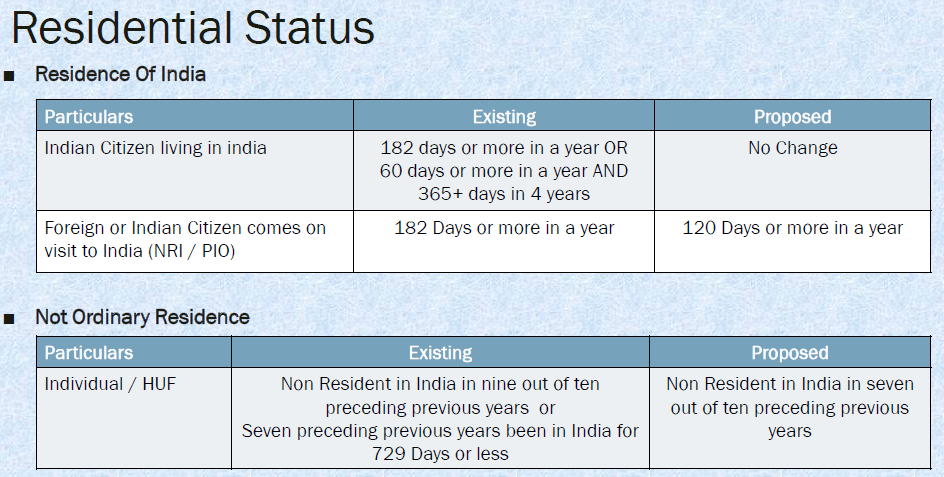
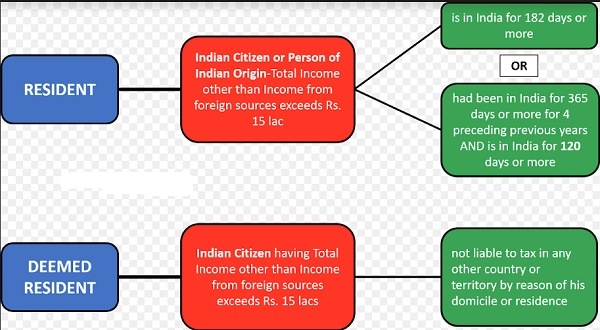
An Individual is said to be a resident Indian for the purpose of Income tax if one of the following Basic conditions are satisfied.
Read our articles:
If one of the above conditions are satisfied then he is resident of india as per income tax. Non-Resident in India if he satisfies none of the basic conditions.
If the Individual fulfils one the following conditions then he said to be resident but not ordinarily resident of India:
Else, he is considered as a resident and ordinarily resident in India.
These conditions need to be tested every year for every Individual.
A Hindu undivided family is said to be a resident in India if the control and management of its affairs is wholly or partly situated in India.
A Hindu undivided family is a non-resident in India if the control and management of its affairs is wholly situated out of India.
In order to determine whether a Hindu Undivided Family is a resident or a non-resident, the residential status of the karta of the family during the previous year is not relevant
An Indian company is always resident in India. A foreign company is resident in India only if during the previous year, control and management of its affairs is situated wholly in India.
Conversely, a foreign company is treated as non-resident if during the previous year, control and management of its affairs is either is wholly or partly situated out of India.
A company can never be ordinarily or not ordinarily resident in India.
Every other person is resident in India if control and management of his affairs is, wholly or partly, situated within India during the relevant previous.
On the other hand, every other person is non-resident in India if control and management of its affairs is wholly situated outside India.
GST on Charitable and Religious Trusts: Exemptions, Rulings and Compliance Explained Do charitable trusts pay GST? The short answer Yes.… Read More
GST Multi-State Registration Made Simer: One Master TRN for Multiple States Expanding a business into new States has always come… Read More
New TDS Framework for Purchase of Property from NRIs Effective 1 October 2026 Income Tax Notification: The CBDT has notified… Read More
Statutory Tax Compliance Calendar – October 2026 October 2026 is one of the busiest compliance months of the year. Businesses… Read More
Unpaid Audit Fees and Auditor Independence: What the ICAI Code of Ethics Really Says No, an auditor is not barred… Read More
Moving to the UAE: What Actually Decides Your Indian Tax Residence Documents show where you live, not your tax status… Read More